
Important MLB events, trades, and signings that happened on December 29
December 29, 2025: The Orioles brought back right-hander Zach Eflin on a one-year deal (with a mutual option for 2027). Eflin originally broke in with the Phillies. Ironically, Eflin re-signed with the Orioles this year on December 28, on a one-year deal.
December 29, 2017: The Rockies landed closer Wade Davis on a three-year, $52 million contract, which was widely viewed at the time as a record-setting benchmark for a relief pitcher deal.
December 29, 2017: Barry Zito and the Giants reached agreement on a seven-year, $126 million contract, a massive pitching deal for that era and one of the headline “Hot Stove” moves of that offseason.
December 29, 1977: Sportswriter Melissa Ludtke filed her landmark lawsuit after being denied access to the Yankees’ clubhouse during the World Series, a key moment in the push for equal locker-room access for women journalists.
December 29, 1969: News reports indicated Curt Flood intended to sue MLB over the reserve clause after he refused to report following his trade to the Phillies, a step that helped set the stage for the legal fight that became Flood v. Kuhn. Flood had previously written to commissioner Bowie Kuhn outlining his intentions.
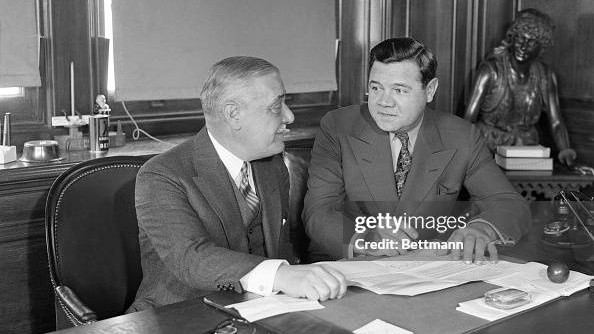
December 29, 1933: Yankees owner Jacob Ruppert refused to grant Babe Ruth his release when Ruth wanted to pursue a managing job; one of those “wait, that almost happened?” moments from the early 20th-century game.
Phillies personnel born on December 29
Tomas Perez (1973)
A fan-favorite utility man from 2000-2005, Perez became known for bouncing all over the infield (and occasionally beyond) whenever the roster needed it.
Odúbel Herrera (1991)
Herrera spent seven seasons with the Phillies as a center fielder, making the NL All-Star team in 2016. He had several seasons where he was a true everyday piece thanks to his energy, defense, and switch-hitting profile.
Thomas Jacquez (1975)
A lefty reliever who reached the majors with the Phillies in 2000, Jacquez made 9 relief appearances with the Phillies in his only MLB season with an 11.05 ERA. Jacquez did spend 8 seasons in the minors with the Phillies, White Sox, and Orioles making 141 relief appearances and 76 starts.
Roly de Armas (1951)
A longtime Phillies minor-league manager and MLB coach, de Armas has been a notable player-development lifer in the organization’s orbit for decades.
A DEEPER DIVE… The Ludtke Lawsuit
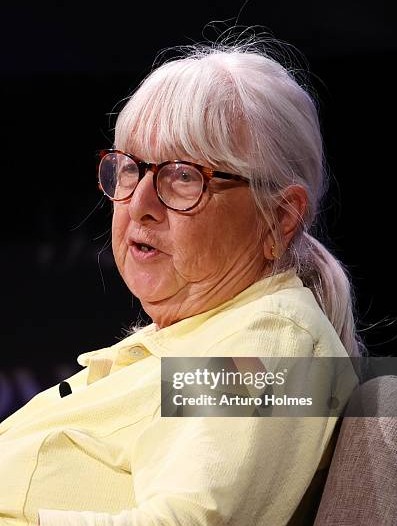
In the late 1970s, sports reporting was still very much a men-only space in both culture and practice. Women covered sports in newspapers and magazines, but they were often steered toward features rather than day-to-day reporting, and they were routinely denied the same access granted to male reporters. One of the clearest examples of that inequity came during the 1977 World Series, when Sports Illustrated reporter Melissa Ludtke was barred from entering the New York Yankees clubhouse after games. Male reporters were allowed inside to conduct interviews and gather quotes, but Ludtke was told she was not allowed to enter because players were undressed. The result was simple and damaging: she was prevented from doing her job on equal footing.
The denial of access was not an isolated decision by a single clubhouse attendant. It reflected an MLB-wide policy that left access decisions to teams and, by extension, allowed women to be excluded entirely. For Ludtke, this was not just a professional inconvenience. It was a career-altering barrier at the most visible event in American sports. After repeated attempts to gain access were denied, Ludtke chose to challenge the system rather than accept it. Her lawsuit would eventually be filed against Major League Baseball commissioner Bowie Kuhn and the New York Yankees.
The lawsuit and its central arguments
Ludtke filed her suit in federal court in 1978, arguing that denying her access to the clubhouse violated her constitutional rights under the Equal Protection Clause of the Fifth Amendment. The case was not framed as a moral argument about fairness alone, but as a legal challenge to a policy that treated journalists differently based solely on gender. Because MLB and its teams operated with significant public privileges and visibility, the lawsuit argued that their actions constituted discriminatory conduct.
A key aspect of the case centered on whether locker-room access was a necessity of the job. MLB’s defense leaned heavily on the claim that women reporters were still able to do their work without entering the clubhouse, pointing to press conferences or hallway interviews as alternatives. Ludtke countered that these options were inadequate substitutes. Much of the best reporting happens in informal settings, where players are more candid and accessible. By excluding women from that environment, MLB was effectively limiting their ability to compete professionally.
Another argument raised by the defense focused on player privacy. Kuhn and the Yankees claimed that allowing women into locker rooms would infringe on players’ rights. Ludtke’s legal team responded by noting that privacy concerns could be addressed through reasonable accommodations, such as requiring players to cover up or providing short waiting periods before media access. The issue, they argued, was not privacy but resistance to change.
The court’s decision and immediate outcome
In 1978, U.S. District Judge Constance Baker Motley ruled in Ludtke’s favor. Her decision was clear and forceful. Motley found that denying equal access to women reporters was unconstitutional and that the policy served no compelling justification. She rejected the idea that alternative reporting methods were sufficient and affirmed that locker room access was a standard and essential part of sports journalism.
The ruling required Major League Baseball to provide women reporters with the same access as men. Importantly, it did not ignore player privacy concerns. Instead, it placed the responsibility on teams to manage clubhouse conditions in a way that respected both reporters’ rights and players’ dignity. This shifted the burden away from women journalists and onto the institutions that had long excluded them.
The decision had an immediate ripple effect. MLB teams began revising their clubhouse policies, and women reporters were formally granted access across the league. While not every interaction became smooth overnight, the legal barrier had been removed. Women were now able to point to a court ruling rather than pleading for exceptions.
How the case reshaped sports reporting
The Ludtke decision fundamentally changed the professional landscape for women in sports media. Access is currency in journalism, and by securing equal access, the lawsuit opened doors that had previously been closed. Women were now able to cover beats full time, build sources, and develop expertise in the same way men always had. This helped normalize the presence of women in locker rooms and on sidelines, even if cultural resistance lingered.
Over time, the ruling also influenced how leagues thought about media policies more broadly. The idea that access rules could be discriminatory forced sports organizations to evaluate their practices through a legal lens rather than tradition. That shift helped pave the way for women to move beyond print reporting into television, radio, and eventually digital-first roles that required constant access to athletes and coaches.
Just as important was the symbolic power of the case. Ludtke’s victory demonstrated that systemic barriers could be challenged successfully. For younger journalists, especially women entering the field in the 1980s and 1990s, the case became a reference point. It showed that exclusion was not something to accept quietly.
Broader milestones for women in sports media
The Ludtke lawsuit did not exist in a vacuum, and its impact can be traced alongside other key moments for women in sports journalism. In the years that followed, women gained credentials in leagues that had previously restricted them, including the NFL and NBA. Female reporters began to appear regularly on national broadcasts, not just as sideline features but as analysts and studio hosts.
In 1990, Lesley Visser became the first woman to cover a Super Bowl sideline for television, a moment that would have been nearly impossible without the legal groundwork laid in the previous decade. Over time, women such as Phyllis George, Hannah Storm and Doris Burke helped redefine what on-air authority looked like in sports media. Burke’s rise as an NBA analyst, in particular, showed that expertise, not novelty, is what should drive acceptance.
The digital era has added another layer. Podcasts, social media, and independent platforms have allowed women journalists to build audiences without relying solely on traditional gatekeepers. Still, the foundation of equal access remains crucial. Locker-room interviews, press availabilities, and team facilities continue to be core reporting spaces, and Ludtke’s case ensures those doors stay open.
The lasting legacy
More than four decades later, the Ludtke lawsuit remains one of the most important legal victories in sports journalism. It addressed a practical problem, access, but its legacy is much larger. The case helped redefine who belongs in sports media and under what conditions. While challenges for women in the field still exist, particularly in areas such as online harassment and representation in leadership roles, the idea that women reporters do not belong in certain spaces has no legal standing.
Melissa Ludtke did not just win the right to enter a clubhouse. She helped change the rules of the profession. Every woman who walks into a locker room today, recorder in hand and deadline looming, does so in part because someone refused to accept “that’s just how it is” as an answer.
Please scroll down to comment on this story or to give it a rating. We appreciate your feedback!

Disclaimer: Some of the products featured or linked on this website may generate income for Philly Baseball News through affiliate commissions, sponsorships, or direct sales. We only promote items we believe in, but please assume that PBN may earn a cut from qualifying purchases that you make using a link on this site.
Privacy Policy | Contact us
© 2025 LV Sports Media. All rights reserved.

 Philly Baseball News