
Again, a day off from Phillies events. But, there has been some news made on December 26 around baseball.
Baseball History — December 26
- 1890 — The National League formally expelled the New York Giants from the league following ownership turmoil and labor disputes, a decision that was later reversed. The episode highlighted how unstable professional baseball governance still was in the 19th century.
- 1913 — The Federal League continued its push to establish itself as a third major league, with several player contracts and franchise maneuvers being finalized during the Christmas-to–New Year window. While not all moves were dated publicly, December 26 falls within the most active stretch of Federal League expansion and raiding of National League rosters.
- 1920 — In the wake of the Black Sox scandal earlier that year, club owners were still quietly negotiating governance reforms in late December. These reforms helped lead to the creation of the Commissioner of Baseball position in early 1921.
- 1935 — Multiple winter player sales and cash-only transactions were reported in late December as teams sought operating funds during the Great Depression. Several minor, but league-wide player movements, reflecting how common post-Christmas roster housekeeping once was.
- 1950 — With the sport fully reestablished after World War II, late-December owners’ meetings and informal agreements were common. In 1950, much of the debate was about television rights and territorial protections, issues that would shape baseball’s economics in the 1950s.
- 1968 — In the immediate aftermath of the “Year of the Pitcher,” teams were actively discussing rule changes during the holiday period. While the formal pitching-mound reduction and strike-zone changes were approved later, The period immediately after Christmas was when the momentum grew toward one of the most significant rule shifts in modern baseball history.
- 1980 — Free agency was still relatively new, and late-December signings and arbitration positioning were increasingly common. Teams, players, and agents looked to get deals done by the end of the year.
- 1994 — During the players’ strike, December 26 fell in the middle of one of the most uncertain offseasons in baseball history. Owners and the union were not meeting formally that day, but contemporaneous reporting shows significant behind-the-scenes maneuvering that ultimately led to the strike’s resolution in 1995.
Phillies personnel born on December 26
- Jeff Stone (born 1960) — Left-handed hitting outfielder who made his MLB debut with the Phillies and spent five seasons in the organization before later playing for Baltimore, Texas, and Boston.
- Dave Rader (born 1948) — Journeyman catcher who spent the 1979 season with the Phillies as part of a 10-year MLB career.
- Stu Miller (born 1927) — Veteran right-hander nicknamed “the Butterfly Man” who pitched for the Phillies in 1956 during his 16-year major-league career. In 15 starts and 9 relief outings with the Phillies, Miller was 5-8, 4.47.
- Danny Schell (born 1927) — Outfielder who appeared in the majors only with Philadelphia, playing for the Phillies in 1954–55, making him a teammate of Stu Miller, who was born on the same day and year as Schell.
- Al Milnar (born 1913) — Lefty pitcher nicknamed “Happy” who pitched for the Phillies in 1946 near the very end of his MLB career. Best known for his seven seasons with Cleveland, Milnar interrupted his career for military service and missed the 1944 and 1945 seasons.
- Art Gardiner (born 1899) — Pitcher who appeared in exactly one MLB game, and it was for the Phillies in 1923. He faced two batters, allowing a single and a walk before being yanked. Even though he pitched in a game, he was not credited with any innings – or even a fraction of an inning – pitched.
- Lee King (born 1892) — Outfielder who played for the Phillies during parts of the 1921 and 1922 seasons. His career spanned from 1916-1922. In all, King played in 83 games with the Phillies and hit 6-45-.260/.304/.454/.758. Ironically, another Lee King also started his MLB career in 1916 with the Philadelphia Athletics. He was also an outfielder, who played in 42 games with the A’s in 1916 and didn’t return to the majors until 1919, playing two games with the Boston Braves.
A DEEPER DIVE… The idea of a third “major league”
For much of baseball’s early history, the National League and American League were not viewed as immovable pillars. They were powerful, yes, but also vulnerable. Owners colluded on salaries, players had little leverage, and cities were growing faster than the leagues could expand. That combination created repeated opportunities for outsiders to challenge the establishment. Two of the most serious attempts were the Players’ League of 1890 and the Federal League of the 1910s. Both believed there was room for another major league, and for a brief moment, both were right.
The Players’ League: a revolt from within
The Players’ League was born out of frustration, not speculation. In the late 1880s, the National League enforced the reserve clause and a rigid salary classification system that capped player earnings regardless of performance. Star players felt trapped, and the Brotherhood of Professional Base Ball Players, effectively the first real players’ union, decided to act.
What made the Players’ League unique was that it was run by players themselves. They owned stakes in teams, shared in profits, and believed fans would support a league built on fairness. In 1890, the league launched with clubs in major markets like New York, Boston, Chicago, and Philadelphia. Attendance was strong in several cities, and the on-field product was legitimate. This was not a minor circuit pretending to be something bigger.
The problem was money and unity. Players were great at playing baseball, but not always at managing expenses or resolving internal disputes. Meanwhile, National League owners fought back hard, undercutting ticket prices and using their deeper financial reserves to wait things out. After one season, the Players’ League collapsed. Yet its impact lingered. The revolt scared owners, weakened the National League, and helped bring about structural changes that eventually led to the American League’s rise.
The Federal League: the last true challenger
Two decades later, the Federal League tried again, but with a very different approach. Instead of attacking governance, it attacked payrolls. The Federal League openly declared itself a major league in 1914 and ignored the reserve clause entirely. Players under contract elsewhere were fair game, and many jumped ship for higher salaries and better treatment.
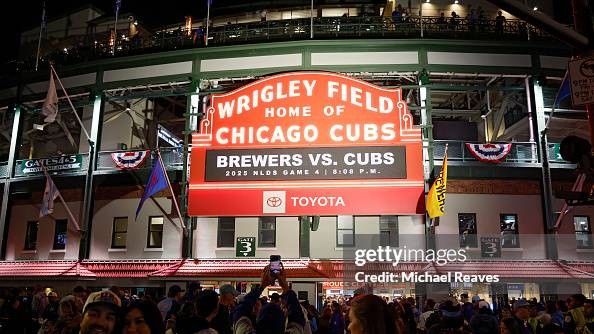
Unlike the Players’ League, the Federal League had wealthy backers and long-term ambition. It placed teams in both established baseball cities and underserved markets like Baltimore, Buffalo, and Indianapolis. The league even put a team in Chicago, directly challenging the Cubs and White Sox, and built what is now Wrigley Field as a Federal League park.
For two seasons, the Federal League was a real problem. Salaries exploded, lawsuits flew, and fans were suddenly choosing between three major leagues. But losses mounted quickly. Competing head-to-head in the same cities drained resources, and some owners underestimated how long a war with organized baseball would last. By late 1915, the pressure became too much.
The settlement that ended the Federal League was quiet but consequential. Most teams folded, owners were bought out, and one franchise, the St. Louis club, was absorbed into the National League. The most lasting impact came from a lawsuit filed by a former Federal League owner. That case led to the Supreme Court ruling that granted baseball its famous antitrust exemption, a decision that reshaped the sport’s business forever.
Why no challenger ever survived
Both leagues failed for different reasons, but they shared a common problem. Becoming a major league required not just talent and fans, but patience, deep pockets, and unified ownership. Baseball’s establishment was able to afford to lose money longer than most challengers would be able to survive. Once the American League firmly established itself, the door effectively closed.
Still, these leagues mattered. They forced change, raised salaries, challenged abusive labor practices, and reminded baseball that its power depended on public trust. Every time modern fans talk about free agency, labor rights, or expansion, they are echoing battles first fought by leagues bold enough to believe baseball was bigger than the system that controlled it.
Please scroll down to comment on this story or to give it a rating. We appreciate your feedback!
Disclaimer: Some of the products featured or linked on this website may generate income for Philly Baseball News through affiliate commissions, sponsorships, or direct sales. We only promote items we believe in, but please assume that PBN may earn a cut from qualifying purchases that you make using a link on this site.
Privacy Policy | Contact us
© 2025 LV Sports Media. All rights reserved.

 Philly Baseball News