
Philadelphia Phillies History on December 19
- December 19, 1957 – The Phillies released catcher Andy Seminick after a long playing career with the club and immediately signed him to a coaching position, keeping him in the organization in a new role. Seminick had two different stints with the Phillies separated by four seasons with Cincinnati.
- December 19, 1973 – Philadelphia signed second baseman Tony Taylor after he had been released by the Detroit Tigers, bringing back a veteran presence who had previously starred for the team. In all, Taylor played 15 seasons with the Phillies. (Taylor was also born on this date; see below)
- December 19, 2006 – Free agent outfielder Jayson Werth signed a minor league deal with the Phillies after being non-tendered by the Dodgers. Werth’s career took off and he would stay in Philadelphia through the 2010 season as a key part of their lineup and a fan favorite.
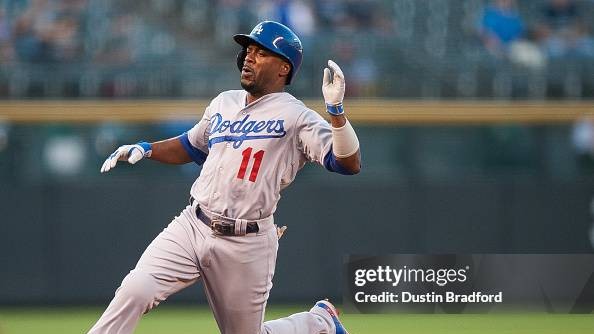
- December 19, 2014 – On this date the Phillies traded longtime shortstop Jimmy Rollins to the Los Angeles Dodgers. In return, the Phillies received pitchers Rob Wittle and Zach Eflin, the latter of whom played a big part in the Phillies rotation later in his career.
- December 19, 2025 – Left-hander Matt Strahm was dealt to the Kansas City Royals for reliever Jonathan Bowlan, a right-hander. In a separate deal, the Phillies added lefty reliever Kyle Backhus from Arizona for minor leaguer Avery Owusu-Asiedu.
Phillies people born on December 19
- Russell Branyan (born 1975) – Branyan, a power-hitting corner infielder/outfielder, was purchased by the Phillies from Cleveland during the 2007 season and played 7 games over a three-week span before being dealt to St. Louis.
- Edubray Ramos (born 1992) – Venezuelan right-handed pitcher who debuted with the Phillies in 2016, Ramos became a solid bullpen arm for Philadelphia through the 2019 season pitching in 162 games with the Phillies, posting a 3.71 ERA.
- Aaron Loup (born 1987) – Left-handed reliever whose journeyman MLB career included a nine-game stint with the Phillies in 2018. Loup was known for his crafty sidearm deliveries.
- Ian Kennedy (born 1984) – Veteran right-handed pitcher who made 19 relief appearances with the Phillies during his 17-year MLB career. The Phillies acquired him from Texas along with Hans Crouse and Kyle Gibson for Josh Gessner, Kevin Gowdy, and Spencer Howard.
- Tony Taylor (born 1935) – Longtime second baseman and two-time All-Star who later coached with the Phillies. Taylor, who passed away in 2020, is honored on the team’s Wall of Fame for his durable and consistent career.
A DEEPER DIVE… The Rise of Jayson Werth
When Jayson Werth arrived in Philadelphia ahead of the 2007 season, there was little indication he was about to become one of the defining figures of a championship era. Werth was coming off a difficult stretch with the Dodgers, where injuries and inconsistent playing time stalled his development. He had missed almost all of 2006 after wrist surgery and was non-tendered by the Dodgers with a label of being talented but fragile. The Phillies saw something others did not: a player with power, athleticism, and patience at the plate who simply needed opportunity and stability. They signed him to a modest one-year deal, essentially a low-risk flyer. It turned out to be one of the most important under-the-radar moves in franchise history.
A Clear Role and a Clean Slate
One of the biggest reasons for Werth’s turnaround in Philadelphia was clarity. From the start, the Phillies gave him a defined role and regular at-bats, something he rarely had in Los Angeles. Charlie Manuel trusted him, even when early results were uneven, and allowed him to play through mistakes. Werth responded by settling into a routine and building confidence. He was no longer trying to prove himself in limited opportunities. Instead, he was preparing every day as an everyday player, and that mattered.
Philadelphia also proved to be a good fit culturally. Werth has often spoken about how much he enjoyed the intensity of the fan base and the accountability that came with it. The city’s edge seemed to sharpen his focus rather than overwhelm him. By mid-2007, he had earned the trust of teammates and coaches, and his production began to reflect his raw tools. He hit for power, ran the bases aggressively, and played a strong right field, quickly becoming a well-rounded contributor rather than a fringe player.
There were also tangible reasons for Werth’s breakout. With the Phillies, he refined his swing mechanics, becoming more selective and disciplined at the plate. His walk rates climbed, his power numbers spiked, and his overall offensive approach matured. Werth stopped trying to do too much and leaned into what he did best; drive the ball to all fields and punish mistakes, especially against left-handed pitching.
Just as important was his physical health. Werth stayed on the field, something that had eluded him earlier in his career. A more consistent training regimen and better health allowed his athleticism to show over a full season. By 2008, he was no longer a question mark. He was a core piece of a contending team.
A Pillar of a Championship Core
Werth’s rise coincided perfectly with the Phillies’ ascent. He became a fixture in an outfield alongside Shane Victorino and Pat Burrell, and later Raul Ibañez. During the 2008 World Series run, Werth delivered big moments, including clutch home runs and steady defense, while embracing the pressure of October baseball. He played with a visible edge, a mix of intensity and confidence that resonated with fans.
By the time he signed a two-year extension after 2008, Werth had fully transformed his reputation. He was no longer the former top prospect trying to stay healthy. He was an All-Star caliber player, a clubhouse leader, and one of the most feared right-handed bats in the National League. From 2009 through 2010, he continued to produce at a high level, cementing his place in Phillies lore.
An Amicable, If Emotional, Exit
Werth’s departure from Philadelphia after the 2010 season was emotional but largely amicable. The Phillies wanted to keep him, but the length and size of the contract he received from Washington were beyond what they were willing or able to offer. Werth left for a massive deal, one that reflected both his performance and the leverage he had earned.
There were no hard feelings between Werth and the organization. He spoke fondly of his time in Philadelphia and has consistently credited the Phillies for saving his career. Fans were understandably conflicted, sad to see him go but appreciative of what he had meant to the team. His return visits were met with applause, not bitterness, a sign of mutual respect.
Jayson Werth’s turnaround in Philadelphia was not an accident. It was the result of opportunity, trust, health, and maturity coming together at the right time. The Phillies gave him a chance. Werth seized it, and both sides were better for it.
Please scroll down to comment on this story or to give it a rating. We appreciate your feedback!
Disclaimer: Some of the products featured or linked on this website may generate income for Philly Baseball News through affiliate commissions, sponsorships, or direct sales. We only promote items we believe in, but please assume that PBN may earn a cut from qualifying purchases that you make using a link on this site.
Privacy Policy | Contact us
© 2025 LV Sports Media. All rights reserved.

 Philly Baseball News