
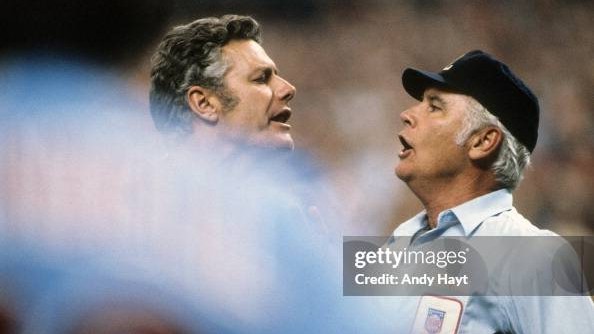
The 1980 National League Championship Series was one for the ages. Many believe it was one of the best playoff series ever played, including World Series games. It was 45 years ago today that the Phillies won that controversial series and advanced to the 1980 World Series against the Kansas City Royals. We take a look at the NLCS in our Deeper Dive segment.
Phillies events on October 12
- October 12, 1965 — Larry Bowa signs with the Phillies as an amateur free agent. Bowa would become Philadelphia’s long-time shortstop, a five-time All-Star and two-time Gold Glove winner who later returned as the club’s manager and a prominent member of the organization.
- October 12, 1980 — Phillies win Game 6 of the National League Championship Series at the Astrodome, 8–7 in 10 innings, to clinch the NL pennant. Garry Maddox delivered the decisive run with a tenth-inning double that scored Del Unser, sending the Phillies to the World Series for the first time in the franchise’s modern-era pennant history.
- October 12, 2009 — Phillies defeat the Colorado Rockies in Game 4 of the NLDS, 5–4, to advance to the NLCS. Philadelphia rallied late in that series-clinching game, overcoming a blown save to eliminate the Rockies and extend the club’s postseason run that year.
Phillies players, managers, executives, and broadcasters born on October 12
- Lou Novikoff — born October 12, 1915. Novikoff was an outfielder who spent all or part of four seasons with the Chicago Cubs and part of the 1946 season with Philadelphia. While Novikoff’s major league tenure was relatively short, he finished his career hitting .282 in 356 MLB games.
- John Kennedy — born October 12, 1926. Kennedy was an infielder who had played just five games in the majors in 1957, all of them with the Phillies.
- Sid Fernandez — born October 12, 1962. Fernandez was a left-handed starting pitcher best known for his All-Star seasons with the Mets; he later pitched for the Phillies in 1995–1996 and finished his career with 114 major-league wins and a reputation as a tough lefty to hit.
A DEEPER DIVE… The 1980 NLCS
The 1980 National League Championship Series was a five-game, edge-of-your-seat battle that produced one of the strangest and most grueling short postseason series in baseball history, with four consecutive extra-inning games after a nine-inning Game 1 and the Phillies ultimately winning three games to two to secure their first modern-era pennant. The matchup paired the Phillies’ powerful but often mercurial lineup and frontline starters against an Astros club built on speed, pitching, and veteran savvy, and it unfolded from October 7–12 with dramatic momentum swings and late-inning heroics.
RETRO IS IN! GET YOUR RETRO PHILLIES GEAR HERE!
Steve Carlton and Joe Niekro anchored the pitching narratives early, but this series was decided by timely offense, bullpen work, and small margins rather than by dominant complete-game efforts. Game 1 was a relatively straightforward 3–1 win for Philadelphia behind Carlton and a two-run homer by Greg Luzinski, the only long ball of the series. After that, the teams settled into a pattern of tense, low-scoring affairs that bled into extra innings and tested every ounce of bench depth, managerial nerve, and bullpen depth on both sides.
Manny Trillo won NLCS MVP honors for his steady glovework at second and key extra-base hits, including a triple and a clutch double that propelled rallies in the decisive Game 5; Trillo’s defense and late-game offense gave Philadelphia critical short-field control and run production. Gary Maddox produced several important hits and finished with timely extra-base knocks, and Del Unser supplied key pinch-hit and extra-inning contributions that swung momentum in Philadelphia’s direction in Houston’s Astrodome games. Mike Schmidt, the regular-season MVP, was quieter than usual at the plate but his presence demanded attention and helped create opportunities for the rest of the order.
Bullpen work shaped outcomes. Tug McGraw was a rock in the late innings, recording high-leverage outs in multiple extra-inning games and calming the storm in Game 4 and Game 5; his poise under pressure turned potential collapses into series-extending victories for the Phils. On the Houston side, Joaquin Andujar, Dave Smith and Joe Sambito delivered key relief stints that kept Houston alive in tight games. The Astros’ ability to manufacture runs in extras revealed a roster comfortable with pressure situations.
Game 4 at the Astrodome became a microcosm of the series’ chaos and controversy. That game featured a sequence widely reported as a phantom triple play that instead was ruled a double play after an extended, 20-minute conference among umpires and league officials; the play began when Garry Maddox stroked a broken-bat liner that Astros pitcher Vern Ruhle fielded near his left foot, then threw to first for a putout while chaos reigned on the bases. The umpires initially signaled no-catch and then reversed to allow the play to be ruled a triple-play. After a conference with National League president Chub Feeney, umpire Doug Harvey explained that his view had been blocked and that other umpires had a better angle; Phillies manager Dallas Green protested the ruling as a trap, while Ruhle insisted he had made the catch, and both teams briefly lodged protests before the game continued. In the end, the play was ruled a double-play because the confusion among the umpires distracted the baserunner – Bake McBride – and in effect, the play was ended because of the umpire’s indecision.
That controversial ruling carried heavy emotional weight because the sequence could have been scored and interpreted in multiple ways and because the game itself saw bizarre base-running and late-inning swings that made the entire contest feel surreal; after the delay, the Phils rallied and won Game 4 in extra innings, a victory that erased Houston’s 2–1 series lead and forced a decisive Game 5 back in the Astrodome. Game 5 echoed Game 4’s drama: the Astros took an early lead and were twice within reach of the pennant before Philadelphia rallied for multiple late runs, including a two-out, two-run burst that put the Phils ahead in the 10th. Garry Maddox’s run-scoring double in that frame became the series’ final dagger and sent the Phillies to the World Series.
The 1980 NLCS endures because of its blend of high drama, revisionist officiating debate, and clutch performances from role players and veterans alike. The series forged the Phillies’ postseason identity that autumn — resilient, occasionally chaotic, and able to find necessary runs in the most unlikely moments — and it left baseball with one of the most replayed, argued-about playoff sequences in the sport’s modern lore.
Please scroll down to comment on this story or to give it a rating. We appreciate your feedback!
Disclaimer: Some of the products featured or linked on this website may generate income for Philly Baseball News through affiliate commissions, sponsorships, or direct sales. We only promote items we believe in, but please assume that PBN may earn a cut from qualifying purchases that you make using a link on this site.
Privacy Policy | Contact us
© 2025 LV Sports Media. All rights reserved.

 Philly Baseball News