
The Main Event
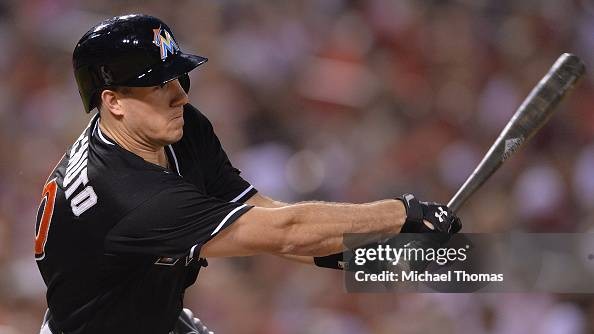
February 7, 2019: The Phillies completed a major offseason roster move by acquiring All-Star catcher J.T. Realmuto from the Miami Marlins in exchange for catcher Jorge Alfaro, pitching prospect Sixto Sánchez, left-handed prospect Will Stewart, and international bonus pool money.
When the Phillies acquired J.T. Realmuto from the Marlins in February 2019, it was a clear signal that the organization was done rebuilding and ready to push its chips into the middle of the table. The deal fit neatly into an aggressive offseason that also included signing outfielder Andrew McCutchen and would later bring Bryce Harper to Philadelphia less than a month later. Realmuto was widely viewed as the best catcher in baseball, and the Phillies were willing to pay a steep price in players and future value to secure a rare difference-maker at a premium position.
Realmuto has largely justified the cost. Since arriving in Philadelphia, he has been one of the most complete catchers in the game, combining power, athleticism, durability, and elite defense. He has earned two All-Star selections with the Phillies and won two Gold Gloves and a pair of Silver Sluggers, reinforcing his reputation as a true two-way catcher.
Beyond the awards, Realmuto became a stabilizing presence for a pitching staff that has gone through constant change. His pitch framing, game calling, and ability to control the running game stood out in October as much as in the regular season. He played a central role in the Phillies’ run to the World Series in 2022 and their return to the postseason in subsequent years. Few catchers in modern baseball have matched his blend of offense and defensive value, and his long-term contract extension in 2021 cemented him as a franchise cornerstone as did his recent three-year, $45-milion additional extension.
Analyzing the Other Players
For Miami, Jorge Alfaro was the most immediate major league piece in the deal. He brought raw power and elite arm strength, but his time with the Marlins highlighted the same inconsistency that followed him in Philadelphia. Alfaro showed flashes, including stretches of impressive offensive production and occasional game-changing throws from behind the plate.
Still, his approach at the plate never fully stabilized, and defensive lapses remained an issue. After a few seasons in Miami, Alfaro moved into a journeyman phase of his career, bouncing between teams and roles. While he carved out value as a backup catcher and occasional power bat, he never developed into the everyday cornerstone Miami hoped for when the trade was made. Alfaro recently signed a minor league contract with the Kansas City Royals.
At the time of the trade, Sixto Sánchez was the jewel of the package. He was one of the top pitching prospects in baseball, known for triple-digit velocity and a polished delivery. His 2020 debut with the Marlins seemed to confirm the hype, as he dominated during the shortened season and postseason with poise well beyond his years.
Unfortunately, injuries derailed his momentum. Shoulder issues and subsequent setbacks limited him to very little major league action in the years that followed. Despite attempts at comebacks, Sánchez struggled to regain his previous form and availability. For Miami, this became the biggest frustration of the deal. The upside was enormous, but durability concerns prevented him from becoming the rotation anchor they envisioned. Sanchez turns 28 in July and is currently a free agent. He had re-signed with the Marlins for last season but was unable to pitch.
Will Stewart was the least heralded name in the trade, but he represented an important part of the Marlins’ strategy. As a left-handed pitching prospect, Stewart offered depth and development upside. His professional career was slowed by injuries, including Tommy John surgery, which limited his ability to progress through the minors.
While Stewart never emerged as a significant major league contributor, his inclusion reflected how the Marlins sought both high-end talent and volume in return for Realmuto. Like many lower-profile prospects, his role in the deal ultimately mattered more on paper than on the field. Stewart, 28, has not pitched in either of the last two seasons.
How the Trade Looks in Hindsight
Looking back, this trade strongly favors the Phillies. Realmuto delivered exactly what Philadelphia needed at a time when the organization was trying to shift from promise to performance. His consistency, leadership, and postseason impact are difficult to overstate, especially at a position where elite production is scarce.
For the Marlins, the return was defensible in theory but disappointing in practice. Alfaro provided limited value, Sánchez’ injuries changed the trajectory of the deal, and Stewart never factored into the long-term picture. The international bonus pool money helped Miami sign young talent, but that value is diffuse and hard to measure directly.
In the end, this trade stands as a reminder that proven stars often outweigh even the best-laid prospect packages. The Phillies took a risk by paying a premium, and it paid off in wins, credibility, and October baseball.
More From PBN
Philly Baseball News – Kerkering: You Have to do the Right Thing
PBN Extra Innings on Substack – Baseball on TV, Part 2: The Protected vs The Unprotected (free)
Other Phillies News
The Athletic – The Phillies Top 20 Prospects (subscription required)
The Inquirer – 60 Phillies Thoughts Ahead of Super Bowl LX by Scott Lauber (subscription required)
Philadelphia Baseball Events For February 7
February 7, 1908: The St. Louis Browns purchased future Hall of Fame pitcher Rube Waddell from the Philadelphia Athletics for about $5,000 (approximately equivalent to $176-thousand today). Waddell established himself as a dominant pitcher with six season in Philadelphia resulting in a 131-82 record and a 1.97 ERA. In 1905, Waddell won the Pitching Triple Crown with 27 wins, a 1.48 ERA, and 287 strikeouts. Overall, he pitched 13 seasons with a 193-143 record and a 2.16 ERA.
February 7, 1948: The Philadelphia Phillies traded outfielder Johnny Wyrostek and cash to the Cincinnati Reds in exchange for 1947 National League All-Star shortstop Eddie Miller. Wyrostek had spent two seasons in Philadelphia and would return for three more at the end of his career. Miller was a seven time all-star prior to coming to Philadelphia, but his best days were behind him. He spent two seasons with the Phillies before moving on to St. Louis.
Around The Majors
February 7, 1996: Dave Winfield announces his retirement at the age of 44. Winfield compiled 3,110 hits, 465 home runs and 1,833 RBI during a 22-year career with six teams. A 12-time All-Star, he joins Hank Aaron, Willie Mays, Stan Musial and Carl Yastrzemski as the only major league players with 3,000 hits and 400 home runs. Winfield will be elected to the Hall of Fame in 2001.
Philadelphia Birthdays For February 7
Ted Kennedy (born 1865): Pitched just two seasons in the majors, throwing 20 of his total 33 games with the Athletics.
Tom Daly (born 1866): An infielder and catcher in the major leagues who played for the Philadelphia Keystones in the short-lived Union Association and went on to play 16 MLB seasons with multiple teams. The Keystones name was adopted by what is now the Reading Fightins and they carried that name from 1923-1932.
Pat Moran (born 1876): A catcher and third baseman who played for the Phillies from 1910-1914. Later served as manager of the team for four seasons (1915-1918) leading them to the NL pennant in 1915. He won a World Series as manager of the Cincinnati Reds in 1919.
Cy Moore (born 1905): A right-handed pitcher who played for the Philadelphia Phillies in 1933–1934 after earlier stints with the Brooklyn Robins/Dodgers.
Paul Owens (born 1924): Born in Salamanca, NY, Owens — nicknamed “The Pope” — spent his entire career with the Phillies organization as a player, manager, scout, executive, and general manager. Was the architect of the 1980 World Series championship team. The award for the best minor league pitcher and position player in the organization is named the Paul Owens Award in his honor to celebrate his time in the Phillies Player Development Department.
Joe Lonnett (born 1927): A catcher who played parts of four seasons with the Philadelphia Phillies in the late 1950s, later contributing to the game as a coach.
Endy Chavez (born 1978): A Venezuelan outfielder who played in Major League Baseball for several teams, including the Philadelphia Phillies. Was best known for his speed and defensive ability.
Víctor Arano (born 1995): A Mexican-born pitcher who debuted with the Phillies in 2017 and spent three seasons with them going 3-2 with a 2.65 ERA in 73 relief appearances. Pitched for the Washington Nationals in 2022 and has not returned to professional baseball since.

 phillybaseball.news