
The Main Event
February 6, 1887 – At Hot Springs, Arkansas, Albert Spalding meets with the Chicago White Stockings players and exacts from each man a pledge of total abstinence from drinking during the coming season. With the entire outfield gone from last year’s team and pitcher Jim McCormick holding out at home in New Jersey, the champion White Stockings will have to rely on young players.
Setting the Scene in Hot Springs
In the spring of 1887, Hot Springs, Arkansas was one of baseball’s most popular training destinations. Teams believed the mineral baths and warm climate offered both physical recovery and a competitive edge after long winters. It was there that Albert Spalding, owner and guiding force of the Chicago White Stockings, gathered his club for what turned into one of the more revealing moments of early professional baseball. Spalding was not just a baseball executive. He was a moral crusader, a businessman, and a believer that discipline off the field translated directly to success on it. When he met with his players in Hot Springs, his message was clear and uncompromising. Every man was expected to pledge total abstinence from alcohol for the coming season.
Spalding’s Vision of Control and Respectability
Spalding’s demand reflected a broader push in the late nineteenth century to make baseball respectable. Professional players still carried reputations as hard drinkers and rowdy figures, traits that worried owners who wanted to attract middle-class fans and families. Spalding believed the game’s future depended on order, discipline, and clean living. By requiring each player to personally pledge sobriety, he was asserting control over a roster that he felt was drifting from those ideals. The setting mattered. Hot Springs was meant to heal bodies, and Spalding wanted it to reset habits as well. The pledge was as symbolic as it was practical, reinforcing his belief that baseball players should model restraint and professionalism.
The timing of the pledge added tension to the moment. The White Stockings were defending champions, but the roster that had earned that title was already coming apart. The entire outfield from the previous season was gone, leaving a major gap in experience and production. Even more troubling was the absence of star pitcher Jim McCormick, who remained at home in New Jersey while holding out over contract terms. McCormick was one of the most important arms in the game, and his refusal to report underscored the growing power struggle between players and owners. With veterans departing and key contributors missing, Chicago faced the uncomfortable reality that youth would have to carry much of the load.
Youth, Authority, and the Future of the Game
Spalding’s insistence on abstinence can be read as both a moral stand and a strategic one. Young players were cheaper, more controllable, and easier to shape. By pairing a youthful roster with strict behavioral expectations, Spalding was trying to build a team that reflected his ideals as much as his competitive goals. The pledge also highlighted the era’s imbalance of power. Players had little leverage and were expected to comply with demands that extended well beyond the diamond. Yet these moments helped lay the groundwork for future resistance, as stars like McCormick demonstrated that talent could still challenge authority.
The 1887 Hot Springs meeting captured baseball at a crossroads. It was a sport growing rapidly, struggling to define professionalism, and negotiating the boundaries between personal freedom and corporate control. Spalding’s abstinence pledge did not solve all of Chicago’s problems, but it remains a vivid snapshot of how early baseball owners tried to shape not just teams, but the men who played the game.
Philadelphia Baseball Events for February 6
February 6, 1898 – Phillies manager George Stallings and club president John Rogers traveled to Cape May, New Jersey, to evaluate and secure a potential site for the team’s spring training. This visit was part of the club’s early experimentation with organized spring camps before Florida became the long-term destination.
February 6, 1978 – Tug McGraw, Steve Carlton, Larry Christenson, and Jerry Martin took part in a charity bicycle ride from Philadelphia to Clearwater, Florida, raising money for charitable causes while symbolically traveling the path from the regular-season home to the Phillies’ spring training base.
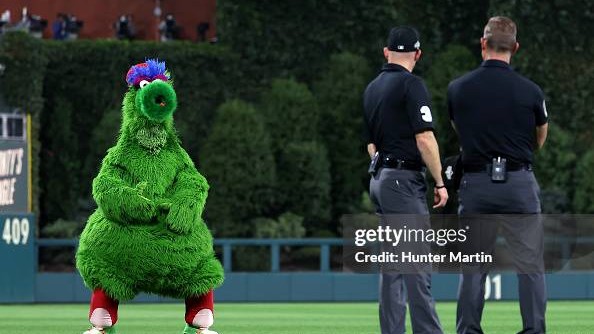
February 6, 2004 – During a charity auction connected to the implosion of Veterans Stadium, the head of the Phillie Phanatic costume was stolen while on display. The unusual theft drew national attention before the mascot head was returned by a man who said he found the head and wanted to collect a reward offered by a local radio station. The man’s story didn’t add up and he was charged with felony theft.
Also…
February 6, 1958 – Ted Williams signs a one-year contract with the Boston Red Sox. Reports on the worth of the contract estimate it between $135,000 to $150,000. Either way, Williams becomes the highest-paid player in major league history.
On PBN: Follow our Prospect Scouting Reports throughout spring training and the regular season.
Elsewhere:
The Philadelphia Inquirer: Lochlahn March provides a Spring Training Preview
The Philadelphia Inquirer: The Phillies are Well Represented in the World Baseball Classic
Philadelphia Baseball Birthdays for February 6
Bob Gamble (born 1867) – Pitcher who was born in Philadelphia and made one start for the Philadelphia Athletics in 1888. He threw a complete game, but gave up 10 runs – eight earned – and never pitched again.
Charles Snyder (born 1873) – Born in Camden, NJ, Snyder was best known as “Pop” and was a catcher for the Philadelphia Athletics in 1890. He played in nine games in 1890 and hit .273 but never played again professionally.
Goldie Rapp (born 1892) – Infielder who played for the Philadelphia Phillies from 1921-1923 and hit .260 while serving as a regular third baseman during his time with the club.
Smoky Burgess (born 1927) – Catcher and renowned pinch hitter who spent three-plus seasons with the Phillies beginning in 1952. Overall he played 18 seasons and had 593 plate appearances as a pinch-hitter with 16 home runs and 147 RBI to go with a slash line of: .285/.376/.434/.810 to be one of the most effective pinch hitters in baseball history.
Also…
Babe Ruth (born 1895) – Ruth was born in Baltimore, MD where his father owned a tavern. He would go on to become the early Hone Run King in baseball with a career 714 home runs. He also won the MVP in 1923, leading all of baseball in runs (151), home runs (41), RBI (130), walks (170), strikeouts (93), OBP (.545), SLG (.764), OPS (1.309). He also played in the first two all-star games in 1933 and 1934. Ruth’s pitching numbers go overlooked many times, but he made 147 starts and 19 relief appearances with a 94-46 record and a career 2.28 ERA.
Ironically, Ruth was born almost 39 years to the day before Hank Aaron, who would succeed him as baseball’s Home Run King with 755. Aaron was born on February 5, 1934.
GO DEEPER INTO THE PHILLIES! PLEASE SUPPORT PHILLY BASEBALL NEWS WITH A FREE 7-DAY TRIAL TO OUR SUBSTACK: PBN EXTRA INNINGS.
Please scroll down to comment on this story or to give it a rating. We appreciate your feedback!
Disclaimer: Some of the products featured or linked on this website may generate income for Philly Baseball News through affiliate commissions, sponsorships, or direct sales. We only promote items we believe in, but please assume that PBN may earn a cut from qualifying purchases that you make using a link on this site.
Privacy Policy | Contact us
© 2025 LV Sports Media. All rights reserved.

 phillybaseball.news