
We have changed up the format for our This Date in Phillies History feature. No more burying the lead at the bottom of the post, and we’re including some Phillies information from around this thing called the internet. We hope you enjoy the new format. You can always find any edition of the feature by using the “Phillies History” drop down at the top of the site. From there, just click on “This Date in Phillies History.”
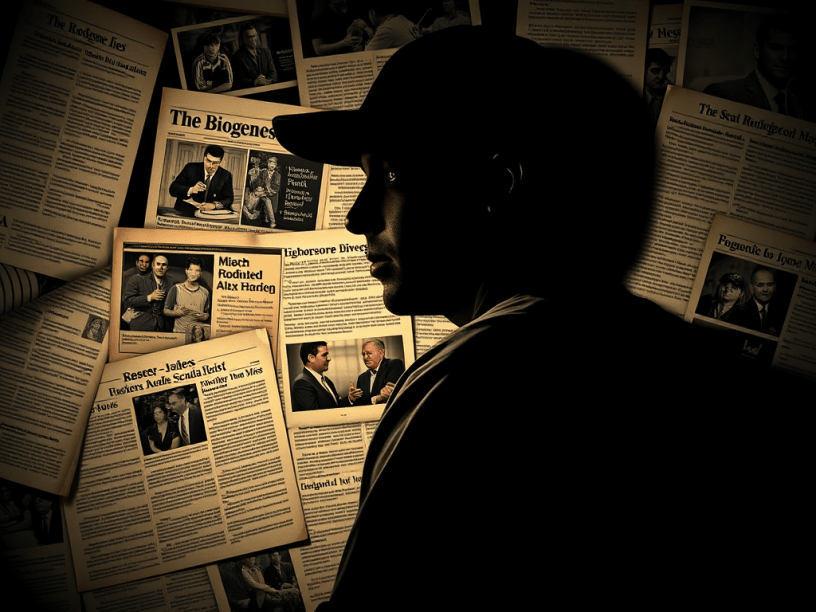
January 29, 2013: The Biogenesis Scandal Breaks
Today marks the anniversary of one of the most consequential scandals of baseball’s modern era: the public breaking of the Biogenesis scandal, a case that reshaped Major League Baseball’s approach to performance-enhancing drugs and reinforced how deeply PEDs had penetrated the sport.
On January 29, 2013, the Miami New Times published a bombshell report revealing that the names of at least seven major leaguers had surfaced in an investigation of a recently closed anti-aging clinic in Coral Gables, Florida, known as Biogenesis Laboratories. The clinic, run by Anthony Bosch, was suspected of distributing performance-enhancing drugs to professional athletes. The most prominent name connected to the clinic was New York Yankees superstar Alex Rodriguez, instantly turning the report into front-page national news and reigniting baseball’s long-running PED controversy.
Discovering Biogenesis
The discovery of Biogenesis was not the result of a traditional law-enforcement drug bust, but rather a mix of investigative journalism and leaked records. After Bosch had a falling out with associates, documents from the clinic — including handwritten ledgers, treatment notes, and payment records — found their way to reporters. These records allegedly detailed the distribution of banned substances such as testosterone, human growth hormone, and other PEDs, often disguised as anti-aging treatments. Unlike earlier scandals, Biogenesis did not rely primarily on failed drug tests, but on documentary evidence tying players to a supplier.
The Miami New Times report gained additional credibility because several of the players named had already been disciplined by MLB. Bartolo Colón, Melky Cabrera, and Yasmani Grandal had all been suspended during the previous year after testing positive for banned substances. Their prior suspensions lent weight to the notion that the clinic was a significant hub for PED distribution rather than an isolated or exaggerated allegation. While not all players named were immediately punished, the connection between the clinic and recent positive tests was impossible for MLB to ignore.
Alex Rodriguez’ involvement became the centerpiece of the scandal. Already under intense scrutiny for past PED use and admitted steroid use earlier in his career, Rodriguez was alleged to have received PEDs from Biogenesis during his tenure with the Yankees. Unlike many previous cases, Rodriguez denied the allegations aggressively, setting the stage for a prolonged and bitter legal battle with Major League Baseball. MLB, determined to demonstrate its seriousness about enforcement, pursued the case with unusual intensity.
The legal issues surrounding Biogenesis were complex and unprecedented for baseball. Because Bosch and the clinic were not subject to MLB’s drug-testing program, the league had to rely on non-traditional evidence: documents, testimony, and cooperation from individuals connected to the clinic. MLB also faced resistance from the MLB Players Association, which argued that the league was overstepping its authority and improperly acquiring evidence. At various points, allegations surfaced that MLB investigators had attempted to buy documents and secure cooperation through financial incentives, further muddying the legal waters.
PBN Editor Chuck Hixson covered Alex Rodriguez as he was waiting for word on a suspension for his involvement in the Biogenesis scandal: PBN Extra Innings on Substack
MLB comes down hard
Despite these challenges, MLB pressed forward. In August 2013, the league announced suspensions for 13 players connected to Biogenesis, including a record-setting 211-game suspension for Rodriguez. Most players accepted reduced suspensions in exchange for cooperation, but Rodriguez appealed, leading to arbitration that stretched into 2014. Ultimately, his suspension was reduced to 162 games, still the longest non-lifetime PED suspension in MLB history.
The impact of the Biogenesis scandal on baseball was profound. It marked a turning point in how the league enforced its drug policy, signaling that MLB was willing to pursue cases even without positive tests. The scandal also demonstrated the league’s increasing reliance on investigative methods more commonly associated with law enforcement and corporate compliance than traditional sports governance.
Culturally, Biogenesis further eroded public trust in the achievements of the steroid era and beyond. Fans were forced to question statistics, records, and legacies, particularly those of star players. For Rodriguez, the scandal effectively defined the latter part of his playing career and permanently shaped his historical reputation.
At the same time, Biogenesis arguably strengthened MLB’s anti-PED efforts. The fear of lengthy suspensions based on documentary evidence, rather than just failed tests, served as a deterrent to players considering PED use. In the years since, high-profile PED scandals have become less frequent, suggesting that the league’s more aggressive posture had a meaningful effect.
More than a decade later, the anniversary of the Biogenesis revelations stands as a reminder of baseball’s long struggle with performance-enhancing drugs. It exposed not only the methods players used to cheat the system, but also the lengths to which the league would go to protect the integrity of the game. While it did not erase the damage done to baseball’s credibility, Biogenesis represented a moment when MLB decisively confronted a problem that had lingered for far too long.
GET A 7-DAY FREE TRIAL TO PBN EXTRA INNINGS FOR EVEN DEEPER COVERAGE OF THE PHILLIES.
Some Light Reading From PBN
- We continue our scouting reports on Phillies prospects who played in the Australian Baseball League this winter. After starting with infielder Jose Colmenares, we moved on to catcher Alirio Ferrebus. Visit our full list of Scouting Reports.
- Coming today, a look at the 27 Phillies non-roster invitees to Spring Training.
Elsewhere on the internet
- Philadelphia Inquirer (subscription required): A Healthy Kemp Gets His Shot
- 97.5 The Fanatic: Four Phillies Prospects Who Could Debut in 2026
Philadelphia Baseball Events on January 29
January 29, 1948: Commissioner Happy Chandler fined the Philadelphia Phillies, the New York Yankees, and the Chicago Cubs $500 for signing high school players, a notable offseason administrative penalty affecting the club. (That amount would be equivalent to approximately $6,700 in today’s dollars.)
January 29, 1961: Former Phillies star Billy Hamilton (who played for the Quakers/Phillies 1890-1895) was elected to the Baseball Hall of Fame by the Veterans Committee, recognizing his legendary career as one of the franchise’s early greats.
January 29, 1966: The Phillies selected INF John Vukovich in the first round of the very first MLB January amateur draft, marking an early draft milestone in franchise history.
January 29, 1996: The Phillies traded pitcher Heathcliff Slocumb along with minor leaguers Larry Wimberly and Rick Holyfield to the Boston Red Sox in exchange for outfielders Lee Tinsley and Glenn Murray and pitcher Ken Ryan as part of a roster overhaul in the offseason before the 1996 campaign.
January 29, 2021: The Phillies signed catcher J.T. Realmuto to a five-year contract extension, locking up their star backstop as a cornerstone of the roster.
Phillies Players, Managers, Executives, Broadcasters Born on January 29
John Coleman (born 1860) – A pitcher who got blasted in one start with the Phillies in 1890 (1.2 IP, 4 H, 8 R, 4 ER, 3 BB, 2 K; 21.60 ERA). It was his only MLB appearance.
Connor Brogdon (born 1995) – A right-handed relief pitcher who appeared with the Philadelphia Phillies at the major league level from 2020 to 2024 with a 10-8, 3.88 mark. He was traded to the Dodgers for minor leaguer Benony Robles in April, 2024.
Nick Dunn (born 1997) – A minor league infielder acquired by the Phillies last June from the Seattle Mariners. He spent last season with Double-A Reading and Triple-A Lehigh Valley and is now an unsigned free agent.
Please scroll down to comment on this story or to give it a rating. We appreciate your feedback!
Disclaimer: Some of the products featured or linked on this website may generate income for Philly Baseball News through affiliate commissions, sponsorships, or direct sales. We only promote items we believe in, but please assume that PBN may earn a cut from qualifying purchases that you make using a link on this site.
Privacy Policy | Contact us
© 2025 LV Sports Media. All rights reserved.

 Philly Baseball News