
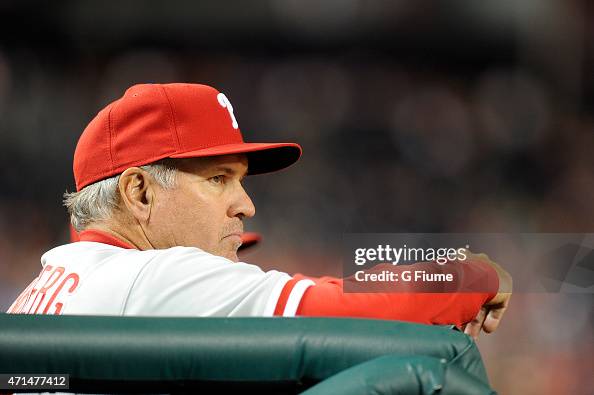
We have changed up the format for our This Date in Phillies History feature. No more burying the lead at the bottom of the post, and we’re including some Phillies information from around this thing called the internet. We hope you enjoy the new format. You can always find any edition of the feature by using the “Phillies History” drop down at the top of the site. From there, just click on “This Date in Phillies History.”
January 26, 1982: The Sandberg Trade
By the winter of 1981–82, the Phillies still saw themselves as a team built to win now. The glow of the 1980 World Series title had not faded, and the roster was filled with veterans who had already proven themselves capable of handling October baseball. The organization’s mindset reflected that reality. The priority was reinforcing an already competitive club, not waiting on young players who might take years to fully bloom.
That philosophy shaped how the Phillies evaluated their farm system. Prospects were assets, but only to the extent they fit a defined role on a contending roster. When a young player lacked a clear path to everyday playing time, his value shifted from future contributor to trade currency. Ryne Sandberg found himself squarely in that category.
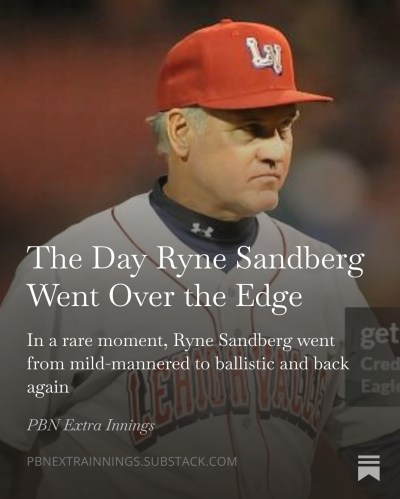
Sandberg entered pro ball with a reputation as a high-character athlete with a well-rounded skill set. Drafted by the Phillies in 1978, he impressed coaches with his work ethic, speed, and baseball instincts. He solid speed and defensive skills, and he had enough pop to keep pitchers honest. What he did not have was a standout tool that screamed future star.
As a third baseman at the time, Sandberg was fundamentally sound but unspectacular. His bat in the minors was solid rather than dominant, and he was not viewed as a middle-of-the-order threat. Scouts liked him, but the word “safe” came up more often than “special.” Within the Phillies’ system, that mattered because his position was already occupied by Mike Schmidt, who was not just entrenched but entering his prime as one of the greatest third basemen in baseball history.
Sandberg’s brief major-league exposure reinforced the idea that he was a useful player without a natural home. He did not look overwhelmed, but he did not force the issue either. Internally, the Phillies saw him as a potential regular somewhere – even a good one – but not as a franchise-altering talent. The idea that shifting him to second base where he would become an elite player had not yet taken hold.
Why the Phillies made the trade
Heading into 1982, the Phillies were focused on roster stability and pitching depth. They believed they were one or two pieces away from sustaining their success in the National League East. Ivan DeJesus fit that vision. DeJesus had developed a discontent attitude in Chicago as the Cubs kept trading away second basemen making forming a cohesive double-play combination difficult for DeJesus. In his five seasons in Chicago he had five different double-play partners. The Cubs also kept changing third basemen and DeJesus was frustrated in having to make adjustments. In 1981, the frustration showed and he got off to a slow start prior to the season being interrupted by a work stoppage. By the end of the season, DeJesus hit just .194 for Chicago.
From Philadelphia’s point of view, DeJesus would be a different player if given the stability of the Phillies infield and the opportunity to play for a winning team. He was a known major-league contributor able to help immediately. Sandberg, by contrast, represented projection and patience, two things the Phillies felt they could afford to sacrifice. Including veteran shortstop Larry Bowa helped balance the deal and gave Chicago leadership and experience.
When the trade was completed in January 1982, it felt logical. The Phillies were trading from surplus for need, and they were doing it in service of winning now.
How the players were seen at the time
At the moment of the trade, DeJesus was the headliner. He was widely regarded as a reliable everyday player, the type of acquisition contenders often pursue. Sandberg was viewed as a secondary piece with upside, someone the Cubs liked but did not build the deal around publicly.
Chicago’s front office saw opportunity in Sandberg’s athleticism. They believed a move to second base would unlock more of his value, but even there, expectations were measured. He was not being billed as a future MVP or Hall of Famer. He was a smart bet on development.
That balance of perception is crucial to understanding why the trade happened. This was not a case of one team fleecing another in plain sight. It was a fair exchange based on contemporary evaluations.
Immediate reaction in Philadelphia and Chicago
In Philadelphia, the reaction barely registered. Fans trusted the front office and the veteran core that had already delivered a championship. Sandberg was known to prospect watchers, but he was not a household name. DeJesus was welcomed as a sensible addition, and the trade was generally viewed as a depth move rather than a franchise-defining decision.
Even as DeJesus struggled with injuries and failed to leave a lasting mark, the trade did not immediately draw criticism. The Phillies remained competitive, reaching the World Series again in 1983. Winning has a way of muting second-guessing, and for a time, that is exactly what happened.
Chicago’s response was more curious than celebratory. Cubs fans were accustomed to rebuilding and waiting, and Sandberg represented another long-term hope. When he began to settle in at second base, there was intrigue, but not hype. His early seasons were solid and encouraging, yet still well short of stardom.
The trade did not dominate headlines in either city. It was seen as a reasonable exchange of players that addressed different needs for two very different teams.
The fallout as Sandberg emerged
Everything shifted once Sandberg blossomed into a star. His breakout in the mid-1980s, capped by an MVP season in 1984, forced a complete reexamination of the trade. What had once been a quiet transaction suddenly became one of the most talked-about deals of the era.
As Sandberg piled up Gold Gloves, All-Star appearances, and power numbers rarely seen from second basemen, the contrast became unavoidable. The Phillies had traded away not just a good player, but one of the best at his position in baseball history.
How the trade is remembered in Philadelphia
Over time, the Sandberg trade has taken on a life of its own in Philadelphia. It is often cited as a symbol of short-term thinking and a failure to fully appreciate athletic upside. That criticism carries some truth, but it also overlooks the context in which the decision was made.
The Phillies were not careless. They were aggressive, confident, and focused on winning in the present. Sandberg’s transformation into a generational talent was not widely predicted, and it is fair to wonder whether it would have happened the same way in Philadelphia, where his path was blocked and his position undefined.
Still, hindsight has a way of hardening narratives. In Philadelphia, the trade has become a permanent reminder of how unpredictable player development can be. It stands not just as a mistake, but as a lesson in humility for every front office that believes it knows exactly what a young player will become.
Philadelphia Baseball Events on January 27
1989: The Phillies purchased the contract of infielder Dickie Thon from the San Diego Padres. Thon, a former All-Star whose career had been derailed by a serious eye injury earlier in the decade, went on to serve as the Phillies’ primary shortstop during the late 1980s and early 1990s.
Phillies Birthdays on January 27
Bill Burns (born 1880): An outfielder in the Deadball Era, Burns played for the Philadelphia Phillies for part of the 1911 season after being claimed off waivers from the Cincinnati Reds. He later became better known as a manager, including a stint with the Detroit Tigers.
Bert Inks (born 1909): A left-handed pitcher, Inks appeared for the Phillies during the 1896 season. His one start and two relief appearances with the Phillies led to a 7.84 ERA and his release.
Gavin Floyd (born 1983): Drafted fourth overall by the Phillies in 2001, Floyd became one of the organization’s top pitching prospects. He pitched parts of three seasons with Philadelphia before being traded to the White Sox along with pitcher Gio Gonzalez for pitcher Freddy Garcia. Floyd had most of his MLB success as a member of the White Sox, where he spent seven seasons.
Mike Zagurski (born 1983): A left-handed reliever, Zagurski made his major-league debut with the Phillies in 2007. Though his time in Philadelphia was limited, he spent multiple seasons in the organization as a minor leaguer. He pitched in parts of six seasons adding stops with Arizona, Pittsburgh, the New York Yankees, and Milwaukee to his resume.
Please scroll down to comment on this story or to give it a rating. We appreciate your feedback!
Disclaimer: Some of the products featured or linked on this website may generate income for Philly Baseball News through affiliate commissions, sponsorships, or direct sales. We only promote items we believe in, but please assume that PBN may earn a cut from qualifying purchases that you make using a link on this site.
Privacy Policy | Contact us
© 2025 LV Sports Media. All rights reserved.

 Philly Baseball News
Green would have definitely known about Sandberg and I’m sure had an opinion on him. Overall though, Sandberg was not thought of as a strong prospect around baseball. Where Green may have helped was in moving him to second base.
LikeLike
I think you are overlooking the Dallas Green factor in all of this. As the Cubs’s GM, he knew about Sandberg.
LikeLike