
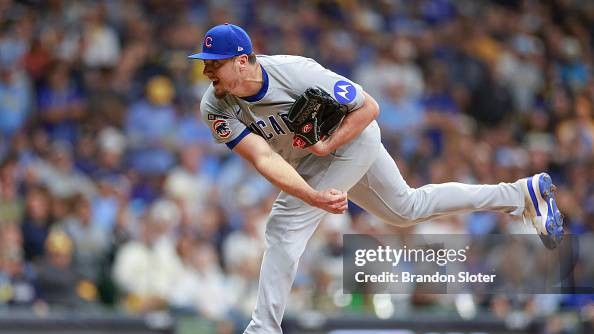
The Phillies have added right-hander Brad Keller on a two-year, $22 million contract, a move that fills another hole in a bullpen they’ve been reshaping this offseason. The agreement was reported by Matt Gelb of The Athletic and is pending a physical by the Phillies.
Keller spent the 2025 campaign with the Chicago Cubs and did his best work out of the bullpen. He showed up as a high-leverage reliever, appearing frequently and turning in impressive numbers, including a low 2.07 ERA, a sub-1.00 WHIP, and 75 strikeouts across about 68 appearances covering 69.1 innings. Those counting lines don’t tell the whole story, but they do explain why teams were interested in him this winter.
Keller’s path to this point has been interesting. A former starter who debuted with the Kansas City Royals in 2018, he logged meaningful innings as a rotation piece early in his career and carved out a reputation for a strong work ethic and competitiveness on the mound. Teams like his size (6’5″, 255 pounds) and arm action, even when results varied. The move to a full-time relief role in recent seasons has arguably been a great career pivot for the 30-year-old. That transition, culminating in the 2025 breakout year with Chicago, have seemingly turned his career around from being a journeyman type pitcher to a valuable late inning bullpen arm.
The Medical Baggage
Keller has a history that includes thoracic outlet syndrome, the same issue that cut short Zack Wheeler‘s 2025 season, and other shoulder-related inflammation and ailments at various points in his career. The good news for the Phillies is that Keller finished 2025 healthy and able to pitch effectively, but his history means the team will want to manage his workload carefully and monitor any signs of recurring shoulder trouble.
Pitch repertoire and why it works
Keller’s arsenal is straightforward but effective. He sits comfortably in the mid-to-upper 90s with his fastball, and his slider/cutter-type breaking pitch plays as a true weapon when it’s riding in the high-80s. He also mixes in a changeup and the occasional curve, but it’s really the fastball-plus-slider pairing that has driven his recent success. Advanced metrics from the 2025 season show improved exit-velocity numbers and a solid groundball profile, which suggests he’s locating better and inducing weaker contact more often than in prior years. That combination — more velocity, a sharper breaking ball, and better contact management — is what turned Keller into a dependable late-inning piece for the Cubs.
Why the Phillies signed him
Philadelphia’s bullpen construction is about depth and matchup versatility. Keller brings a profile that fits both needs: he can handle multiple innings in a pinch, he’s shown he can get both right-handers and left-handers out, and he can be dialed into high-leverage spots when needed. The two-year term buys the Phillies extra runway to see whether Keller remains this version of himself, while $22 million is a price that reflects both his upside and the question marks from his injury past.
The Keller signing is a classic managed-risk move. If he stays healthy and maintains the improved metrics he posted in 2025, the Phillies get a power-armed, high-leverage reliever who can shorten games and absorb innings. If his shoulder or other prior issues reappear, the two-year deal limits long-term exposure. Either way, Philadelphia added a pitcher with a clear recent track record of success and the late-inning toolkit that looks tailor-made for another revamped Phillies bullpen.
Please scroll down to comment on this story or to give it a rating. We appreciate your feedback!

Disclaimer: Some of the products featured or linked on this website may generate income for Philly Baseball News through affiliate commissions, sponsorships, or direct sales. We only promote items we believe in, but please assume that PBN may earn a cut from qualifying purchases that you make using a link on this site.
Privacy Policy | Contact us
© 2025 LV Sports Media. All rights reserved.

 Philly Baseball News