
Phillies History Events on December 14
- 1948: The Phillies acquired first baseman Eddie Waitkus and pitcher Hank Borowy from the Chicago Cubs in exchange for pitchers Dutch Leonard and Monk Dubiel; Waitkus’ later involvement in an off-field incident would become a famous moment in baseball lore. (See A DEEPER DIVE – Part 1 for more on this incident.)
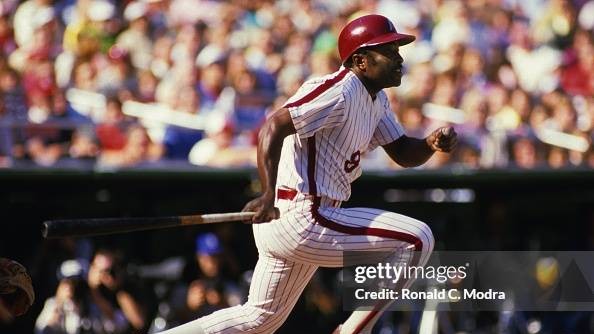
- 1982: Philadelphia completed a notable trade with the San Francisco Giants, sending pitchers Mike Krukow, Mark Davis, and minor-leaguer C.L. Penigar to San Francisco in exchange for future Hall of Famer Joe Morgan and relief ace Al Holland; Morgan and Holland would help the Phillies reach the 1983 National League Championship Series. (See A DEEPER DIVE – Part 2 for more on this trade.)
- 1994: The Phillies signed free agent infielder/outfielder Gregg Jefferies to a four-year contract, adding a veteran bat and versatile position player to the roster.
- 2015: The Phillies signed catcher J.P. Arencibia and relief pitcher Ernesto Frieri to minor league contracts with invitations to major league spring training, moves aimed at adding depth to the pitching staff and catching corps. Neither played in the majors for the Phillies and both were released early in the 2016 season.
Phillies personnel born on December 14
- Stan Baumgartner (born 1894): A Phillies pitcher who played in the 1910s and 1920s before later becoming a noted sportswriter and broadcaster in Philadelphia. He spent his whole career in Philadelphia; 1914-1916 and 1921-1922 with the Phillies, 1924-1926 with the Athletics.
- Pete Dempsey (born 1956): Drafted by the Phillies in 1978, he pitched in the Phillies’ minor league system from 1978-1980 and then pitched in the Blue Jays system in 1981 and 1982. He never did pitch in the majors.
- Eric Bennett (born 1962): Drafted by the Phillies in the 26th round of the 1984 MLB June Amateur Draft; pitched in the organization’s minor league system in 1984 and 1985.
- David Parkinson (born 1995): A left-handed pitcher drafted by the Phillies in the 12th round of the 2017 Draft and pitched in their minor league system from 2017-2024. Parkinson never did reach the majors.
- Maykol Javier Fernandez (born 2007): A young Venezuelan prospect in the Phillies’ minor league system, who played at third and first base in the Phillies Dominican Summer League program in 2025.
A DEEPER DIVE – Part 1… The Natural
Eddie Waitkus was involved in one of the most infamous off-the-field incidents in baseball history, an event that shocked the sport and later inspired popular culture.
Waitkus, the Phillies’ first baseman, was shot on June 14, 1949, in a Chicago hotel room by a woman named Ruth Ann Steinhagen. Steinhagen was a deeply troubled fan who had developed an obsessive fixation on Waitkus over several years. She invited him to her room at the Edgewater Beach Hotel under the pretense of wanting an autograph. Once inside, she shot him in the chest with a rifle at close range.
Remarkably, the bullet missed his heart by inches. Waitkus survived after emergency surgery, but the physical recovery was only part of the ordeal. He later described lingering pain, emotional trauma, and difficulty regaining his confidence at the plate. Despite this, he returned to the Phillies less than three months later and helped lead the team to the 1950 National League pennant, becoming a key contributor to the “Whiz Kids.”
Steinhagen was arrested immediately and later found legally insane. She spent time in a mental institution rather than prison and was eventually released years later. The case raised early public awareness about stalking behavior, long before the term was commonly used.
The incident had a lasting cultural impact. It directly inspired Bernard Malamud’s novel The Natural, in which the main character, Roy Hobbs, is shot by a mysterious woman early in his career. While the book and film take major fictional liberties, Malamud acknowledged that the Waitkus shooting was the seed for the story.
Within Phillies history, the incident stands as both a cautionary tale and a testament to Waitkus’ resilience. Though his career was never quite the same statistically, his return to the field and role on the 1950 pennant winner cemented his place in franchise lore.
A DEEPER DIVE – Part 2… Morgan and Holland become Phillies
The deal that brought Joe Morgan to the Phillies is one of the more fascinating late-career trades involving a Hall of Fame player, and it ended up helping both clubs in very different ways.
On December 14, 1982, the Phillies acquired Joe Morgan and left-handed reliever Al Holland from the San Francisco Giants in exchange for pitchers Mike Krukow, Mark Davis, and minor leaguer C.L. Penigar. At the time, the move drew relatively modest attention nationally because Morgan was 39 years old and widely viewed as being near the end of his career. Many assumed the Phillies were acquiring a respected veteran presence rather than a meaningful on-field contributor.
Behind the scenes, the Phillies were motivated by several factors. They were coming off a disappointing 1982 season after winning the World Series in 1980 and the NL East in 1981, and general manager Paul Owens wanted leadership, postseason experience, and flexibility. Morgan fit that profile perfectly. While no longer an everyday second baseman, he was still an elite baseball mind, an excellent on-base threat, and a clubhouse force who commanded instant respect. The Phillies also saw value in Holland, who had quietly developed into a reliable late-inning arm.
Morgan’s impact in Philadelphia exceeded expectations almost immediately. Though his role was reduced, he became a key contributor to the 1983 team that won the NL East and reached the World Series. He played multiple positions, got on base at a strong clip, and served as an on-field strategist, frequently working with younger players on positioning and situational hitting. Several Phillies from that era later said Morgan functioned as an extension of the coaching staff, especially with middle infielders and hitters trying to refine their approach.
Al Holland arguably became the biggest on-field prize in the deal. He emerged as the Phillies’ closer in 1983, posting a 2.26 ERA and saving 25 games while finishing second in National League Cy Young voting. His dominance in high-leverage situations was crucial to the Phillies’ pennant run, and without Holland stabilizing the bullpen, it’s unlikely that team reaches the World Series.
From San Francisco’s perspective, the trade made sense for a franchise in transition. The Giants were looking to get younger and add controllable pitching. Mike Krukow went on to have several productive seasons with the Giants, including an All-Star year in 1986, before later becoming a beloved broadcaster. Mark Davis eventually developed into a top closer, winning the National League Cy Young Award in 1989. In that sense, the Giants arguably extracted more long-term value, even if it wasn’t immediate.
One interesting anecdote surrounding the deal is how underestimated Morgan was at the time. Some Phillies players later admitted they thought he was essentially finished when he arrived. That perception changed quickly once they saw his preparation, his understanding of pitchers, and his ability to influence games without needing to hit for power. Morgan himself embraced the role of mentor and tactician, recognizing that his value now lay as much in his mind as in his legs.
In hindsight, the trade stands out as a rare example of a late-career Hall of Famer making a meaningful contribution to a pennant winner, while also allowing the other team to build future success. For the Phillies, Morgan and Holland were essential pieces of their final National League championship era. For the Giants, Krukow and Davis became cornerstones of their pitching staff later in the decade. It wasn’t a blockbuster at the time, but it turned out to be one of those rare baseball trades where both sides genuinely won.
Please scroll down to comment on this story or to give it a rating. We appreciate your feedback!
Disclaimer: Some of the products featured or linked on this website may generate income for Philly Baseball News through affiliate commissions, sponsorships, or direct sales. We only promote items we believe in, but please assume that PBN may earn a cut from qualifying purchases that you make using a link on this site.
Privacy Policy | Contact us
© 2025 LV Sports Media. All rights reserved.

 Philly Baseball News