
Phillies History — Events of December 13
- December 13, 2001 – The Philadelphia Phillies traded pitcher Chris Brock to the Baltimore Orioles in exchange for pitcher John Wasdin. Eight days later, Wasdin was given his release by the Phillies and he signed with Yomiuri in the Japanese League. He returned to the states in 2023 and signed with Pittsburgh. Brock made 22 relief appearances with the O’s in 2002 with a 4.70 ERA.
- December 13, 2013 – Philadelphia selected pitcher Kevin Munson from the Arizona Diamondbacks in the Rule 5 Draft. The Phillies returned Munson to the D-backs.
Phillies personnel born on December 13
- Perci Garner (born 1988) Garner was a second round draft pick by the Phillies in 2010, but he never pitched for the Phillies. His only MLB action came in 2016 with Cleveland when he made eight relief appearances with a 4.82 ERA.
- Johan Camargo (born 1993) The Phillies signed Camargo as a free agent following the 2021 season. He played in 52 games with the Phillies in 2022 and hit .237. His final season was in 2023 with San Francisco. He is best known for his five seasons with the Atlanta Braves.
- Brandon Leibrandt (born 1992) The Phillies drafted Leibrandt in the sixth round of the 2014 Draft, but he never pitched for them. The left-hander did pitch in the majors with Miami in 2020 and with Cincinnati in 2024. He started last season at Triple-A in the Yankees organization but was released and pitched in the Chinese Professional League for the rest of the season.
- Don Erickson (born 1936) was a right-handed pitcher who pitched nine games – his only MLB experience – with the Phillies in 1958. He posted a 4.63 ERA with nine strikeouts in 11.2 innings.
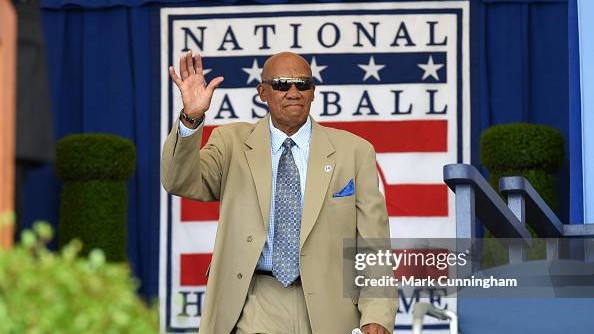
- Fergie Jenkins (born 1942) is one of the most accomplished pitchers in baseball history and a Hall of Famer who began his major league career with the Phillies. Originally signed by Philadelphia, Jenkins debuted in 1965 and spent parts of two seasons with the club before being traded to the Cubs, where he developed into one of the dominant pitchers of his era. He was inducted into the Baseball Hall of Fame in 1991.
A DEEPER DIVE… Ferguson Jenkins
Fergie Jenkins stands as one of the most significant pitchers in baseball history, not just for his accomplishments on the mound but for what he represented as the first Canadian-born player inducted into the National Baseball Hall of Fame. Born on December 13, 1942, in Chatham, Ontario, Jenkins was a gifted all-around athlete who starred in multiple sports as a teenager. Baseball ultimately won out, and his combination of size, coordination, and calm competitiveness made him an appealing prospect even before he fully refined his pitching craft.
The Philadelphia Phillies signed Jenkins as an amateur free agent in 1962, initially envisioning him as more than just a pitcher. Like many young players of the era, he was tried in multiple roles, including time as an outfielder, before the organization committed to developing him primarily on the mound. That early experimentation reflected both Jenkins’ athleticism and the Phillies’ uncertainty about how best to deploy him.
Fergie Jenkins With the Phillies
Jenkins made his major league debut with the Phillies in 1965 and appeared in parts of two seasons with the club. His raw ability was evident, but his role was not clearly defined. He pitched both as a starter and reliever, often working in short stints and sometimes being used in high-leverage situations without much consistency. While his stuff was promising, he was still learning how to harness it at the major league level.
The Phillies of the mid-1960s were a talented but volatile team, still dealing with the psychological fallout from the infamous 1964 collapse. They were trying to remain competitive while retooling on the fly, and that environment was not always conducive to patient player development. Jenkins showed flashes of excellence, including strong strikeout numbers, but his overall results were uneven. He finished his Phillies tenure with a respectable but unspectacular record, and it was not yet obvious that he would become a Hall of Fame-caliber pitcher.
The Trade to the Cubs
In April 1966, the Phillies traded Jenkins, and outfielders John Hernstein and Adolfo Phillips to the Chicago Cubs in exchange for veteran right-hander Larry Jackson and utility player Bob Buhl. At the time, the move made a certain amount of sense for Philadelphia. The Phillies were trying to win immediately and valued Jackson’s experience and proven durability. Jackson had already established himself as a reliable starter with the Cubs, and the Phillies believed he would stabilize their rotation.
The Cubs, on the other hand, were willing to gamble on upside. Jenkins was still young and unproven, but Chicago saw a pitcher with the physical tools and mental makeup to handle a heavier workload. Once Jenkins arrived in Chicago, the Cubs committed to him as a full-time starter and allowed him to pitch regularly and deeply into games. That decision changed the trajectory of his career.
In hindsight, the trade is often cited as one of the most lopsided in Phillies history, though that assessment benefits from decades of perspective. Jenkins blossomed almost immediately with the Cubs, developing into one of the most durable and dominant pitchers of his era. From the late 1960s through the mid-1970s, he was a fixture near the top of the National League in wins, innings pitched, and strikeouts. His Cy Young Award in 1971 and seven seasons of 20 or more wins cemented his legacy.
Larry Jackson did provide value to the Phillies, particularly in 1966, when he helped anchor the rotation and posted solid numbers. However, his time in Philadelphia was relatively short, and he was nearing the end of his prime. Bob Buhl, included in the deal, was a minor contributor. When weighed against the extraordinary career Jenkins went on to have, it is difficult to argue that the trade truly benefited the Phillies in the long term.
That said, it is important to understand the context. Jenkins had not yet proven he was be a frontline starter, and the Phillies were under pressure to contend. Player development philosophies were less patient than they are today, and teams often prioritized immediate needs over long-term upside. From that standpoint, the trade was understandable, even if it ultimately proved costly.
A Hall of Fame Career
After leaving Philadelphia, Jenkins built a résumé that placed him among the greatest pitchers of his generation. He won 284 games, logged 4,500 innings, and was known for his consistency and control. He rarely walked batters, limited home runs for much of his career, and possessed an almost unmatched ability to take the ball every fifth day.
Jenkins’ calm demeanor and durability became trademarks. He was not overpowering in the modern sense, but his command and intelligence allowed him to dominate lineups year after year. His induction into the Hall of Fame in 1991 was both a personal milestone and a landmark moment for Canadian baseball.
Legacy and Phillies Perspective
For the Phillies, Jenkins remains a reminder of how fragile talent evaluation can be. His brief time in Philadelphia is a footnote in his career, but the trade that sent him away looms large in franchise lore. While the decision made sense in its moment, history has judged it harshly. Jenkins’ success with Chicago and then with Texas and Boston underscores the importance of patience and role clarity, lessons that continue to resonate throughout baseball today.
Please scroll down to comment on this story or to give it a rating. We appreciate your feedback!

Disclaimer: Some of the products featured or linked on this website may generate income for Philly Baseball News through affiliate commissions, sponsorships, or direct sales. We only promote items we believe in, but please assume that PBN may earn a cut from qualifying purchases that you make using a link on this site.
Privacy Policy | Contact us
© 2025 LV Sports Media. All rights reserved.

 Philly Baseball News