
Phillies events of December 10:
- December 10, 1945 — The club purchased the contract of first baseman Frank McCormick from the Cincinnati Reds. McCormick had been a star — including a 1940 MVP — and this was part of the club’s offseason efforts to rebuild after World War II.
- December 10, 1951 — The Phillies completed a seven-player trade with the Reds, acquiring pitcher Howie Fox, catcher Smoky Burgess and infielder Connie Ryan in exchange for pitcher Niles Jordan, catcher Andy Seminick, infielder Eddie Pellagrini and outfielder Dick Sisler.
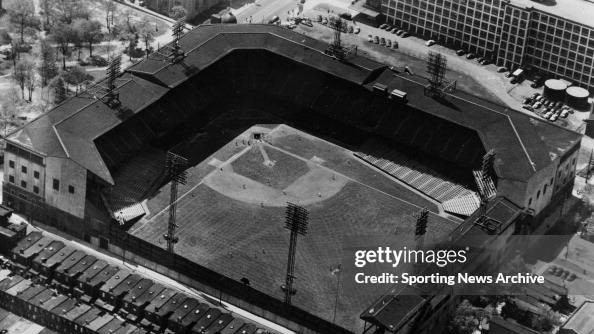
- December 10, 1954 — The franchise purchased Connie Mack Stadium, then home of the Philadelphia Athletics, as the A’s prepared to move to Kansas City — a moment in broader Philadelphia baseball history.
- December 10, 1966 — The Phillies traded pitcher Joe Verbanic and cash to the New York Yankees in exchange for pitcher Pedro Ramos.
- December 10, 1975 — The Phillies traded outfielder Mike Anderson to the St. Louis Cardinals for pitcher Ron Reed.
- December 10, 1976 — The Phillies traded pitchers Dick Ruthven and Roy Thomas along with outfielder Alan Bannister to the Seattle Mariners in exchange for outfielder/infielder Phil Bradley and pitcher Tim Fortugno.
- December 10, 2008 — The Phillies acquired catcher Ronny Paulino from the Pittsburgh Pirates in exchange for minor-league catcher Jason Jaramillo. This was a minor-league level transaction meant to add depth behind the plate.
- December 10, 2020 – Former Phillies hitting coach Billy DeMars passed away. DeMars was a longtime coach and the Phillies’ hitting coach during the 1980 World Series championship era.
Phillies personnel born on December 10:
- Pedro Florimón (1986) A switch-hitting infielder who reached the majors with the Orioles and later played for the Minnesota Twins, Pittsburgh Pirates and played 65 games for the Phillies in 2017 and 2018.
- Jon Zuber (1969) First baseman/outfielder drafted and developed by the Phillies, Zuber played in parts of the 1996 and 1998 seasons for Philadelphia before later playing in Japan.
- Doc Edwards (1936) A backup catcher who later spent time as a big-league coach, including a stint on the Phillies coaching staff in the early 1970s, and went on to manage in the big leagues; his playing career included a late-career appearance in 35 games with the Phillies in 1970.
- Troy Puckett (1889) A right-handed pitcher who made a single major-league appearance for the 1911 Philadelphia Phillies, pitching two innings and allowing three earned runs in 1911.
- Austin Wynns (1990) A veteran catcher who signed a minor-league deal with the Phillies and provided organizational depth at Triple-A Lehigh Valley.
A DEEPER DIVE… The Philadelphia Athletics and Connie Mack Stadium
The Philadelphia Athletics were one of the charter franchises of the American League in 1901. Their first home was Columbia Park, but by 1909 they moved into a newly-constructed ballpark on the north side of Philadelphia — Shibe Park. Shibe Park was built of steel and concrete, the first of its kind in major-league baseball, and opened on April 12, 1909.
Under longtime manager and part-owner Connie Mack, the Athletics enjoyed considerable success in the early decades. The club captured multiple pennants and won several World Series, becoming for a time the dominant American League franchise.
Meanwhile, the Phillies — the National League team — had their own venues (such as the Baker Bowl) but in 1938 made a major move: they abandoned the Baker Bowl and relocated to Shibe Park to become roomies with the Athletics.
Thus began a period where Philadelphia supported two major‐league baseball teams concurrently: the AL Athletics and the NL Phillies. From 1938 to 1954 both teams shared Shibe Park/Connie Mack Stadium, giving Philadelphia baseball fans almost continuous major league action.
However, over time the Athletics began to fade from their early prominence. Financial difficulties, declining attendance, and internal family disputes over control of the franchise weakened their viability. By 1954 the Athletics drew only about 300,000 fans citywide — far below what was needed to sustain two major league franchises in Philadelphia.
In 1953, Shibe Park was renamed Connie Mack Stadium, honoring Connie Mack’s remarkable half-century as the Athletics’ manager.
By late 1954 the ownership decided to sell the Athletics. The franchise — and its ballpark — were sold to Chicago businessman Arnold Johnson for about $3.5 million, which included covering roughly $2 million in debt, thus ending the Athletics’ 54-year stay in Philadelphia. Johnson immediately moved the team to Kansas City, beginning play there in 1955.
At the same time, the Phillies took steps to secure their home by purchasing Connie Mack Stadium. The Phillies’ owner, R. M. Carpenter Jr., bought the stadium from Johnson for about $1.675 million. Owning the park gave the Phillies control of their venue, but it also tied them to a ballpark that was aging, neglected, and not well-suited for modern baseball needs such as limited parking, poor access and a deteriorating neighborhood.
Connie Mack Stadium was located in North Philadelphia, on a city block bounded by Lehigh Avenue, 20th Street, Somerset Street and 21st Street.
Under Phillies ownership, the park saw some updates: for instance, by 1956 they installed a large outfield scoreboard that had previously been used at Yankee Stadium.
Despite those efforts, the stadium’s limitations became ever more apparent by the 1960s. It lacked modern amenities, adequate parking, and the surrounding neighborhood was no longer thriving. Within a few years, the club and city moved toward building a new multipurpose stadium.
The last major-league game played at Connie Mack Stadium was on October 1, 1970 — the Phillies beat the Montreal Expos 2–1. The team then relocated to the newly constructed Veterans Stadium in 1971. The old stadium remained standing but deteriorated; it was torn down in 1976.
In sum, the Philadelphia Athletics (1901–1954) and the Phillies (from 1938 onward) co-existed for roughly two decades under the same roof — first Shibe Park, then Connie Mack Stadium. That era is a unique chapter in major-league history, when one city supported two major-league clubs in two leagues at once. The sale of the A’s and the Phillies’ acquisition of the park marked a turning point in Philadelphia baseball. The aging stadium remained the Phillies’ home for another quarter-century, until changing demands ultimately led to a move to a modern facility.

 Philly Baseball News