
Events on December 3 in Philadelphia Phillies history
- December 3, 1958 — The Phillies traded pitcher Jack Sanford to the San Francisco Giants for pitcher Ruben Gomez and catcher Valmy Thomas. The trade turned out poorly for Philadelphia as Sanford went on to win 24 games in 1962 and helped the Giants win the pennant. Meanwhile, Gomez was 3-11, 5.63 in 13 starts and 36 relief appearances for the Phillies over two seasons. Thomas played one season in Philly and hit .200/.253/.236 in 66 games.
- December 3, 1958 — On the same day, the Phillies acquired shortstop Ruben Amaro Sr. from the St. Louis Cardinals in exchange for outfielder Chuck Essegian.
- December 3, 1964 — The Phillies traded southpaw pitcher Rudy May and first baseman Costen Shockley to the Los Angeles Angels for left-handed pitcher Bo Belinsky. The Phillies had just acquired May from the Chicago White Sox less than two months earlier.
- December 3, 1974 — The Phillies acquired reliever Tug McGraw, along with Don Hahn and Dave Schneck, from the New York Mets in a six-player deal, sending Del Unser, John Stearns, and Mac Scarce to New York. This was a franchise-changing move: McGraw became a key part of the Phillies bullpen and helped lead them to their first World Series championship in 1980.
Phillies-affiliated individuals born on December 3
- Chad Durbin (1977) A right-handed reliever for the Phillies in two separate stints, he was a key bullpen piece on the 2008 World Series championship team, providing multi-inning reliability.
- Chris Snelling (1981) An outfielder who spent a brief time with the Phillies in 2008, Snelling appeared in four games as a left-handed pinch-hitter going 2-for-4 and hitting a memorable pinch-hit homer in his second at-bat with the club.
- Paul Byrd (1970) A right-handed starter who pitched for the Phillies from 1998 to 2001, Byrd had his best Philadelphia season in 1999, winning 15 games and becoming a dependable member of the rotation.
- Clay Dalrymple (1936) A longtime Phillies catcher from 1960 to 1968, Dalrymple was known for his strong defensive skills and excellent arm, becoming one of the franchise’s most durable and respected backstops of the era.
A DEEPER DIVE… Tug McGraw
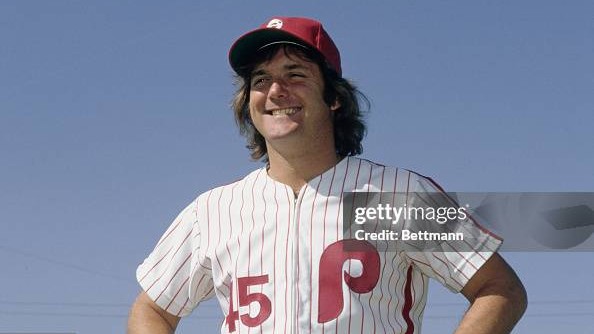
Tug McGraw’s baseball life is one of the most colorful and memorable stories in the game’s history. He was a pitcher with unmistakable personality, a screwball that baffled hitters, and a presence on the mound that made him a fan favorite on both sides of the Northeast corridor. His career spanned more than a decade and a half, and along the way he became a World Series hero, a symbol of optimism, and an enduring part of Philadelphia sports culture.
McGraw began his major league journey with the New York Mets in the mid-1960s. Early on, he was still learning to harness his stuff and find a role on a team that was transitioning from lovable underdogs to legitimate contenders. Everything clicked for him in the late 1960s and early 1970s, when he grew into one of the Mets’ most dependable relievers. His breakthrough came during the 1969 season when the Mets shocked the baseball world by winning the World Series. McGraw was not yet the bullpen ace he would soon become, but he contributed to that championship identity and embraced the sense that anything was possible for a team that had long been the punchline of the National League.
McGraw’s personality always shined, but it reached new heights in 1973. The Mets were struggling deep into the season and searching for a spark. Tug became the source of that spark when he coined the phrase “Ya Gotta Believe,” originally meant as a playful jab during a team meeting but quickly adopted as the rallying cry for the club’s dramatic push to the National League pennant. The Mets improbably surged to the World Series, falling just short against the Oakland A’s, yet McGraw’s phrase lived on. It became part of Mets lore and remained attached to his name for the rest of his life.
By 1974, the Mets were ready to make changes. McGraw was traded to the Philadelphia Phillies in December of that year, a move that would become one of the most significant transactions in Phillies history. Philadelphia was a team on the rise, full of young talent, but they needed a steady hand in the bullpen and a big personality to help shape the clubhouse. McGraw delivered both. His energy was infectious, and his screwball remained one of baseball’s most effective and unusual weapons.
Throughout the late 1970s, McGraw became a central piece of the Phillies’ success. The club reached the postseason in 1976, 1977, and 1978, but each time fell short of the World Series. Fans appreciated Tug’s enthusiasm and consistency, and he loved the relationship he built with Philadelphia. He was known as the player who waved wildly to the crowd after big outs, who kept teammates loose, and who embraced the tough-love spirit of the city.
Everything came together in 1980. That Phillies team finally broke through, winning the franchise’s first World Series title after decades of heartbreak. McGraw was at the center of that run, and his performance in the postseason is one of the greatest in team history. In the World Series against the Kansas City Royals, he appeared in four games and recorded the final out of the clinching Game 6. The moment that sealed the championship remains iconic: McGraw firing a pitch past Willie Wilson for a called third strike, thrusting his arms in the air, and leaping off the mound as Veterans Stadium erupted. It is one of the defining highlights in Philadelphia sports.
McGraw continued to pitch for the Phillies through the 1984 season. Even as his workload decreased, his presence and leadership never faded. He finished his career with 180 saves, two World Series rings, and a reputation as one of the most beloved relief pitchers in baseball. His charisma extended well beyond the field, and he maintained close ties to Philadelphia long after his playing days ended.
A unique part of McGraw’s story involves his son, country music star Tim McGraw. Tug did not publicly acknowledge Tim as his son until Tim was an adult, but the two eventually built a relationship. Tim McGraw has often spoken about how meaningful those later years with his father were, and Tug’s impact on him is clear in interviews and tributes.
Tug McGraw passed away in 2004 after a battle with brain cancer, but his legacy lives on. Philadelphia remembers him not only for the 1980 championship but for the joy and personality he brought to the game. Mets fans still cherish the “Ya Gotta Believe” spirit he helped create. And baseball as a whole views him as one of the sport’s unforgettable characters. His career was more than saves and strikeouts. It was about energy, optimism, and connection. That is why Tug McGraw remains a legend in two cities and a figure whose story continues to be shared with new generations of fans.
Please scroll down to comment on this story or to give it a rating. We appreciate your feedback!
Disclaimer: Some of the products featured or linked on this website may generate income for Philly Baseball News through affiliate commissions, sponsorships, or direct sales. We only promote items we believe in, but please assume that PBN may earn a cut from qualifying purchases that you make using a link on this site.
Privacy Policy | Contact us
© 2025 LV Sports Media. All rights reserved.

 Philly Baseball News