
Curt Flood’s campaign to change baseball’s reserve clause had Philadelphia as a center piece. The saga effectively ended on This Date in Phillies History when the Phillies traded him to the Washington Senators. Plus, the tenure of a new Phillies GM started on this date, and the Phillies were on the wrong end of a World Series no-hitter.
Phillies events that occurred on November 3
- 1970 – Curt Flood traded to the Washington Senators: The controversial transaction that followed Flood’s challenge to baseball’s reserve clause. Flood had been dealt from St. Louis to the Phillies in 1969, but refused to report and sat out the 1970 season after filing a lawsuit challenging the reserve clause. The deal to the Senators and Flood’s agreement to sign a contract with Washington was his attempt to return to baseball. His career was effectively over at that point and he played just 13 games with the Senators in 1971.
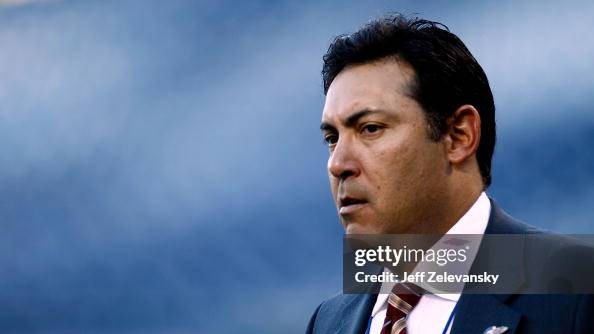
- 2008 – Ruben Amaro Jr. named Philadelphia Phillies general manager: Five days after the Phillies won the 2008 World Series, long-time assistant GM Ruben Amaro Jr. replaced Pat Gillick as the club’s general manager, signing a multi-year deal to run the team.
- 2022 – The Phillies get no-hit in the 2022 World Series: In Game 4 at Citizens Bank Park four Houston Astros pitchers – Cristian Javier, Bryan Abreu, Rafael Montero, and Ryan Pressley – combined on a no-hitter to beat the Phillies 5–0. The Astros win tied the series 2-2.
Phillies players, managers, executives, and broadcasters born on November 3
- Wally Flager (1921) Shortstop/outfielder who had a brief major-league career and spent part of the 1945 season with the Philadelphia Phillies, playing in 49 games.
- Paul Quantrill (1968) Longtime reliever who pitched for 7 different clubs including the Phillies in 1994 and 1995. Quantrill made 30 starts and 21 relief appearances during his stint with the Phillies.
A DEEPER DIVE… Ruben Amaro’s Philadelphia career
Ruben Amaro Jr. grew up inside the rhythms of Phillies baseball, which shaped the way he thinks about the game even today. He was the club’s batboy from 1980 through 1983 while his father, Ruben Amaro Sr., served as the team’s first-base coach. That early immersion gave him daily access to major-league clubhouse life and a practical education in how a franchise runs on a human level.
He parlayed that upbringing into a strong amateur and collegiate career, graduating from William Penn Charter School and then went on to Stanford, where he starred on the 1987 College World Series championship team. The skills and polish he developed there put him on the map for professional organizations and led to his selection in the 1987 amateur draft.
Amaro made it to the majors as a switch-hitting outfielder and played parts of eight seasons in the big leagues from 1991 through 1998. During his playing days he wore a Phillies uniform in multiple stints, so his on-field connection to Philadelphia goes beyond the familial and into direct experience as a major-league player for his hometown club. Those years taught him how front offices evaluate talent and how players respond to organizational decisions, learning that later influenced his work off the field.
Soon after hanging up his cleats he moved into the Phillies’ front office. He rose through their player-development and scouting ranks and became assistant general manager, a position he held through the late 1990s and the 2000s. That period included the build toward sustained contention, which culminated in the Phillies’ 2008 championship season. Amaro’s front-office résumé positioned him to take over as general manager when Pat Gillick stepped down; the club officially named Amaro GM on November 3, 2008.
As general manager Amaro had to balance immediate roster needs with long-term planning. He presided over a franchise that was coming off its first World Series title in 28 years, and he had to manage expectations, contract extensions, arbitration, and a complex free-agent market. Early in his GM tenure he made several notable moves aimed at sustaining the team’s window of contention. Later, his time as GM was defined by some high-profile successes and also decisions that drew criticism as the club navigated injuries, declining performance, and changing market conditions. He remained Philadelphia’s GM until September 10, 2015, when the organization parted ways with him after consecutive difficult seasons.
After leaving the front office Amaro pivoted back to on-field roles and to media. He served as a first-base coach with the Boston Red Sox and then with other teams, applying his evaluative skills directly in player coaching and game preparation. He later returned to Philadelphia in the broadcast booth as a color commentator, rejoining the franchise in a role that lets him explain decisions, evaluate players, and share the kind of inside stories only someone who has been a batboy, player, executive, and coach can tell.
Amaro’s voice in the booth is shaped by the full arc of his baseball life. He can talk about scouting reports with the confidence of an evaluator, decode managerial strategy from someone who ran a team, and recount clubhouse dynamics from a player’s point of view. Fans hear explanations that connect small-game details to organizational strategy. That breadth makes his commentary especially useful for viewers who want to understand why a team does what it does rather than only what happened in a particular inning.
Ruben Amaro Jr.’s path — batboy, player, front office, coach, and broadcaster — is unusual but yet makes perfect sense. Each stage fed the next, and each role broadened his view of the game. For fans who followed his career, his presence in the broadcast booth feels like a natural continuation of a life spent inside the game, offering context, insider perspective, and the kind of informed opinion that comes from having done almost every job in the building.
Please scroll down to comment on this story or to give it a rating. We appreciate your feedback!
Disclaimer: Some of the products featured or linked on this website may generate income for Philly Baseball News through affiliate commissions, sponsorships, or direct sales. We only promote items we believe in, but please assume that PBN may earn a cut from qualifying purchases that you make using a link on this site.
Privacy Policy | Contact us
© 2025 LV Sports Media. All rights reserved.

 Philly Baseball News