
Phillies events on October 29
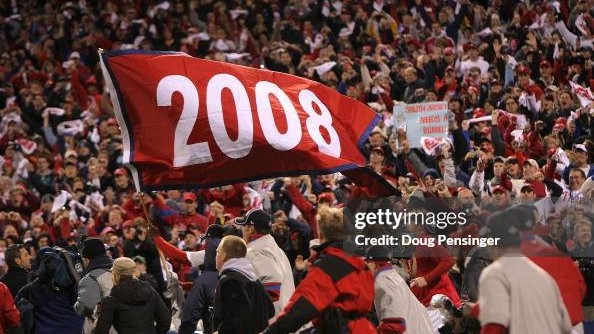
- October 29, 2008 — Phillies clinch the 2008 World Series
The Philadelphia Phillies defeated the Tampa Bay Rays 4–3 in Game 5 at Citizens Bank Park to win the franchise’s second World Series title; Brad Lidge recorded the final out and Cole Hamels was named World Series MVP. The game actually started on October 27 but was suspended in the sixth inning and eventually completed on October 29.
Phillies people born on October 29
- Joseph “Happy” Finneran — born October 29, 1890
Right-handed pitcher Joseph Ignatius “Happy” Finneran made his major-league debut with the Philadelphia Phillies in 1912 and later played several seasons in the Federal League and other majors, compiling a career as a swing-era pitcher. - Ty Pickup — born October 29, 1897
Clarence William “Ty” Pickup was a Philadelphia native who appeared in one game for the Phillies in 1918, singling in his lone at-bat and playing an inning in right field before a longer minor-league career. You have to respect a guy who finished with a 1.000 batting average in the majors. - Pat Combs — born October 29, 1966
Pat Combs was a first-round draft pick of the Phillies who made his MLB debut in 1989 and pitched for Philadelphia from 1989–1992, finishing with a 17–17 record and a 4.22 ERA in his major-league career.
A DEEPER DIVE… The Phillies Win The World Series
The 2008 Philadelphia Phillies rolled into the season with a mix of established stars and some key new pieces that would come to define their October run. They finished the regular season 92–70 and won the National League East for the second straight year, thanks to a powerful lineup and an improving pitching staff that came together at the right time. Ryan Howard, Chase Utley, Jimmy Rollins, and Pat Burrell supplied the thump in the middle of the order, while Shane Victorino’s speed and defense provided balance atop the lineup.
A big part of the team’s identity was its bullpen, with Brad Lidge emerging as an iron-clad closer who did not blow a save all year. Lidge’s dominance in high-leverage spots gave the Phillies the kind of late-inning security that turns tight games into wins. Joe Blanton, acquired midseason from Oakland, helped stabilize a rotation that otherwise leaned heavily on Cole Hamels and Jamie Moyer, and that depth proved critical in October.

This supposed curse on Philadelphia sports was a tongue-in-cheek superstition that blamed Philadelphia’s long championship brought on by development in center city. The culprit was One Liberty Place, a skyscraper rising taller than the William Penn statue atop City Hall, that broke an old “gentleman’s agreement.” In the mid-1980s, fans linked the city’s sudden run of near-misses and losses across major pro teams to that architectural shift, and the story gained new life when Comcast executives placed a small William Penn statuette on the topping beam of the Comcast Center in 2007, a public gesture tied to the idea of reversing the curse. When the Phillies won the World Series on October 29, 2008 many fans treated the title as the symbolic end of the curse. Check out BaseBulb’s wisdom.
The postseason began with the Division Series against the Milwaukee Brewers. The Phillies handled that series in four games, getting timely pitching performances and a lineup that did not rely on one hitter alone to carry the offense. Cole Hamels, already showing signs of postseason brilliance, carried momentum from the division round into the National League Championship Series against the Los Angeles Dodgers. Hamels was named NLCS MVP after a dominant set of starts that helped Philadelphia close out the Dodgers in five games and secure the National League pennant.
Game 1 of the World Series set the tone. Hamels faced Scott Kazmir and produced one of the defining pitching performances of the postseason, helping the Phillies to a 3–2 win on the road. The Phillies showed balance in that game, getting an early two-run homer from Chase Utley and then relying on bullpen depth late to preserve the margin. Tampa Bay answered in Game 2, but the series shifted to Citizens Bank Park with momentum still in Philadelphia’s favor.
Game 3 at Citizens Bank Park was one of those memorable October classics that makes baseball feel timeless. The game stretched into the early hours because of late innings drama and a suspension of conventional strategies. Eric Bruntlett reached base and ultimately scored on a bizarre sequence that included a wild throw from the catcher, a controversial defensive alignment by the Rays, and a Carlos Ruiz dribbler that became the game-winning run. The Phillies eked out a 5–4 victory that swung the series in their favor and showcased the little things that add up in October baseball.
Game 4 provided an exclamation point to the Phillies’ momentum. Joe Blanton, the trade deadline pickup, hit a home run and also pitched well, while the offense exploded for a 10–2 victory. That blowout put the Phillies one win away from the franchise’s first championship since 1980 and made the atmosphere in Philadelphia electric. The roster construction, from big bats to timely role players and a lock-down bullpen, all showed up in that game and validated the front office moves made during the season.
Game 5 became the most talked-about game of the series because of what happened off the field and on it. Torrential rain forced an unusual interruption with the game tied and play suspended in the middle of the sixth inning. That postponement pushed the completion of the game to October 29, and when action resumed the Phillies picked up right where they left off. Geoff Jenkins came through as a pinch-hitter, Jayson Werth and Pedro Feliz delivered clutch hits, and the Phillies held on for a 4–3 win that clinched the championship. Brad Lidge closed the door for the final out and completed a perfect save season, a rare and dramatic finish to an unforgettable October.
Cole Hamels earned World Series MVP honors for his exceptional work on the mound. He had been steady all postseason, and his ability to handle pressure starts in both the NLCS and World Series was a major reason the Phillies were able to sustain their run. Offensively, Ryan Howard led the majors in homers and RBIs during the regular season, and his power presence was a constant threat even when other hitters had quiet nights. Chase Utley and Shane Victorino offered both protection and spark in the lineup, and Jimmy Rollins supplied speed and defense that often set the table for big innings.
The 2008 championship meant more than a trophy. It snapped a long championship drought for Philadelphia’s big four pro teams and ended the so-called Curse of Billy Penn for the city’s skyline lore. The parade down Broad Street and the celebration that followed were expressions of a city that had been waiting for a major sports title for nearly a quarter century. For the Phillies organization, it was validation of years of roster building and player development, plus timely veteran acquisitions that fit manager Charlie Manuel’s clubhouse-first approach.
Looking back, the season is a study in balance and timing. The offense was powerful and patient. The rotation featured an ace in Hamels and a veteran presence in Moyer. The bullpen, led by Lidge, was elite. The front office made targeted moves, like the Blanton trade, that addressed weaknesses without disrupting chemistry. And on the field, a core group of players hit their peaks at the same moment, turning a good regular season into an all-the-way run in October.
The 2008 Phillies remain a touchstone for how a franchise can combine homegrown stars with smart midseason moves and strong bullpen work to win a championship. It was the culmination of years of incremental progress and a reminder that October belongs to teams that find ways to win close games and get contributions from every corner of the roster. The title also cemented the legacies of players like Hamels, Howard, Utley, Rollins, and Victorino and enshrined the 2008 club in Philadelphia sports lore.

 Philly Baseball News