
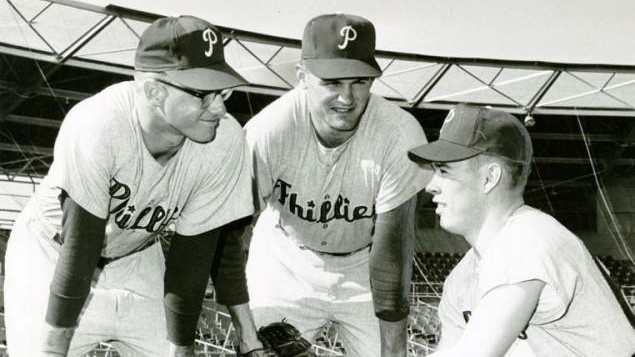
John Morris, who signed with the Phillies as a teenager in 1960, passed away in Scottsdale, Arizona on October 15th at the age of 84, leaving behind a career that reads like a mid-century baseball road trip across the country. Born and raised in Lewes, Delaware, he was a local standout who signed with the Philadelphia Phillies as an 18-year-old rather than pursue college football and baseball offers. That decision started a long grind through Philadelphia’s farm system before he finally broke into the big leagues in the summer of 1966.
Morris’s climb through the minors was steady and patient. He spent five full seasons in the Phillies’ farm system, learning how to pitch against better hitters and adjusting to professional life on the road. He sharpened his secondary pitches and built arm strength by throwing a lot of innings, mostly in relief at first and then in longer outings as he matured. The payoff came in July 1966 when Philadelphia called him up and he made his major-league debut in relief at the Astrodome. That first cup of coffee in the majors lasted into September and produced a 1-1 mark and a 5.27 ERA across 13 appearances.
The Phillies had a crowded pitching staff and roster crunches were common. Morris lost his 40-man roster spot after the 1966 season and spent all of 1967 back in Triple-A with the San Diego Padres, which was then Philadelphia’s affiliate in the Pacific Coast League. Rather than a sudden breakout, Morris’ career followed the path of many pitchers of his era: flashes in the majors interspersed with long stints in high-level minors where he could dominate and retool his arsenal.
A key turn in Morris’ career came when he was included as the player to be named later in a transaction that sent Dick Hall to the Phillies, and he was sent to the Baltimore Orioles in December 1967. With Baltimore in 1968 he found more consistent big-league time. He made 19 appearances out of the Orioles’ bullpen and posted a tidy 2.56 ERA while going 2-0, though like before much of the year was still spent in the minors because Baltimore’s roster was deep and competitive. The Orioles reached the top end of the American League that season, and with little room on that staff Morris’s path to everyday big-league innings was blocked.
The 1969 expansion draft reshaped Morris’ career. Left unprotected by Baltimore, he was selected by the Seattle Pilots, a new franchise that offered opportunity simply by existing. The Pilots gave him big-league time and a place in baseball lore, including a brief cameo in Jim Bouton’s Ball Four, which chronicled life on that quirky and short-lived club. Morris’ stint with Seattle was brief, and when the franchise moved and became the Milwaukee Brewers he stayed with the organization and found the most sustained major-league role of his career.
Milwaukee was where Morris’ contributions were most visible. In 1970 he served as a swing man, making both starts and relief appearances and posting a 3.93 ERA in 20 games, including nine starts. The highlight of that season came in mid-May when he threw two complete games in consecutive starts, beating the New York Yankees on May 13 and the Oakland A’s on May 19, the latter a win over Jim “Catfish” Hunter. Those back-to-back complete games were the peak of a season where he proved he could handle starting work when called upon and still transition back to relief duties.
In 1971 Morris settled into a regular role in the Brewers bullpen. He appeared in 43 games and compiled a 3.72 ERA in 67 2/3 innings, showing steadiness and durability out of the pen. After the 1971 season he was traded to the San Francisco Giants, where he spent the last chapters of his major-league career. His time in San Francisco was mostly bullpen work and included spot assignments between the big club and Triple-A. He finished his major-league career on a respectable note in 1974, posting a 3.05 ERA across 17 relief appearances that season for the Giants.
Across eight big-league seasons from 1966 to 1974, Morris appeared in 132 games, compiled an 11-7 record, and recorded a 3.95 lifetime ERA. He struck out 137 batters and finished his career with two saves, work that represents the journeyman but reliable left-hander teams valued in that era. The stat line only hints at the story behind it: a pitcher who repeatedly adjusted to new roles, moved through multiple organizations, and kept finding ways to contribute whenever opportunity arose.
Morris’ career also included recognition at home. He was inducted into the Delaware Sports Hall of Fame in 1987, an honor that acknowledged both his professional achievements and the pride his home state took in a native son who reached the majors and carved out a near-decade as a pro pitcher. He remained connected to the game’s community through such honors and through the memories of teammates and fans who remembered his left-handed deliveries and midseason heroics.
Remembering John Morris is remembering the baseball life of his generation: long treks through minor-league towns, sudden call-ups and demotions, and the satisfaction of days when everything came together on the mound. He won games against big names, held his own in both starting and relief roles, and adapted to the churn of trades and expansion that reshaped baseball in the late 1960s and early 1970s. His passing drew notes from baseball outlets and local obituaries that reflected on a steady, hardworking career and the human stories behind a professional athlete’s statistics.

 Philly Baseball News