
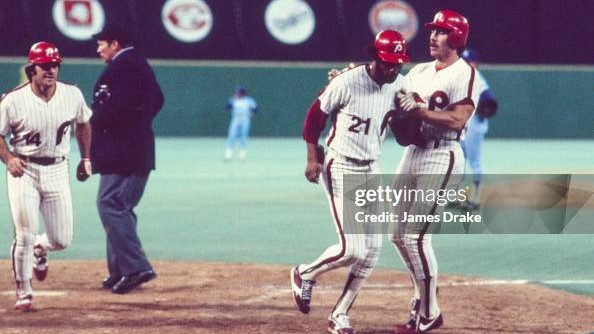
Phillies events on October 14
- October 14, 1980 — World Series Game 1: the Phillies won the series opener on the road as Philadelphia began its run toward the franchise’s first World Series championship.
- October 14, 1983 — World Series Game 3: the Orioles defeated the Phillies 3–2 in Baltimore in a tight pitching duel that featured Phillies starter Steve Carlton leaving after 6 2/3 innings.
Phillies Birthdays for October 14
- Tom Poorman — Born October 14, 1857; a 19th‑century outfielder who played several seasons for Philadelphia Athletics teams during the 1880s and appears in period box scores and player registers tied to those clubs.
- Kiko Garcia — Born October 14, 1953; an infielder who spent the final years of his major‑league career with the Phillies (1983–1985) after earlier service with the Orioles and Astros and who produced a notable postseason performance for Baltimore in 1979.
- Midre Cummings — Born October 14, 1971; an outfielder who was claimed off waivers by the Phillies in July 1997 and appeared with Philadelphia that season during an 11‑year major league career that included a role on the 2001 World Series–winning Arizona Diamondbacks’ roster.
- Al Oliver — Born October 14, 1946; a seven‑time All‑Star and .300‑career hitter who played for many clubs including a late‑career stint with the Phillies in 1984 and who ranks among the era’s most consistent hitters with multiple batting titles and Silver Slugger awards.
A DEEPER DIVE… Al Oliver
Al Oliver enjoyed an 18-year Major League Baseball career as a left-handed hitting outfielder and first baseman who combined contact, durability, and situational power to become one of the most consistent hitters of his era. He debuted with the Pittsburgh Pirates in 1968, grew into a middle-of-the-order presence through the 1970s, and was part of the Pirates’ World Series championship team in 1971. Oliver was a seven-time All-Star, earned three Silver Slugger Awards late in his career, and remained an everyday performer from his rookie season into his late 30s.
Oliver’s raw numbers underline his longevity and production: he compiled 2,743 hits, a career batting average of .303, 219 home runs and 1,326 runs batted in across 9,049 at-bats, finishing with an OPS of .795 and a career WAR that reflects substantial value over nearly two decades. He topped .300 in 11 seasons and repeatedly finished among league leaders in hits, doubles and total bases, demonstrating a blend of contact and extra-base ability rather than relying solely on home runs for his offensive value.
Oliver’s profile was built on a compact left-handed swing, strong plate discipline, and an eye for line drives and doubles. He was not a prototypical slugger but provided steady run production and timely hits, often finishing seasons near the top of team and league charts for hits and RBI. Defensively he offered corner-outfield range and first base coverage, which extended his utility to clubs that needed a reliable bat and positional flexibility, especially late into his career.
Oliver’s career path included productive chapters after leaving Pittsburgh. He spent four seasons with the Texas Rangers where he continued to hit for high averages, then enjoyed a late-career renaissance with the Montreal Expos, winning the National League batting title and leading the league in RBI in 1982 while collecting multiple Silver Slugger Awards around that span. Those seasons with Montreal reinforced his reputation as a hitter who could both adapt and maintain a high level of offensive output even as he moved between teams and roles.
In 1984 Oliver had a brief stop with the Philadelphia Phillies as part of a journeyman stretch that also included time with the San Francisco Giants that same season. Though his stint in Philadelphia was short and came near the twilight of his career, Oliver’s presence carried the hallmark traits he offered every club; a disciplined left-handed bat, veteran savvy in the lineup, and the ability to step in and produce hits and situational offense when called upon. The Phillies episode is often remembered as one of several late-career moves before Oliver finished his playing days with the Los Angeles Dodgers and Toronto Blue Jays in 1985.
Oliver’s legacy is that of a quietly excellent and dependable hitter whose career totals and rate statistics place him among the more productive position players of the 1970s and early 1980s. He compiled seasons of remarkable consistency rather than single-season flash, and his 2,700-plus hits, .303 lifetime average, and repeated top-10 finishes in offensive categories make him a lasting example of sustained offensive competence in modern baseball history.

 Philly Baseball News